Colonial Revival kitchens
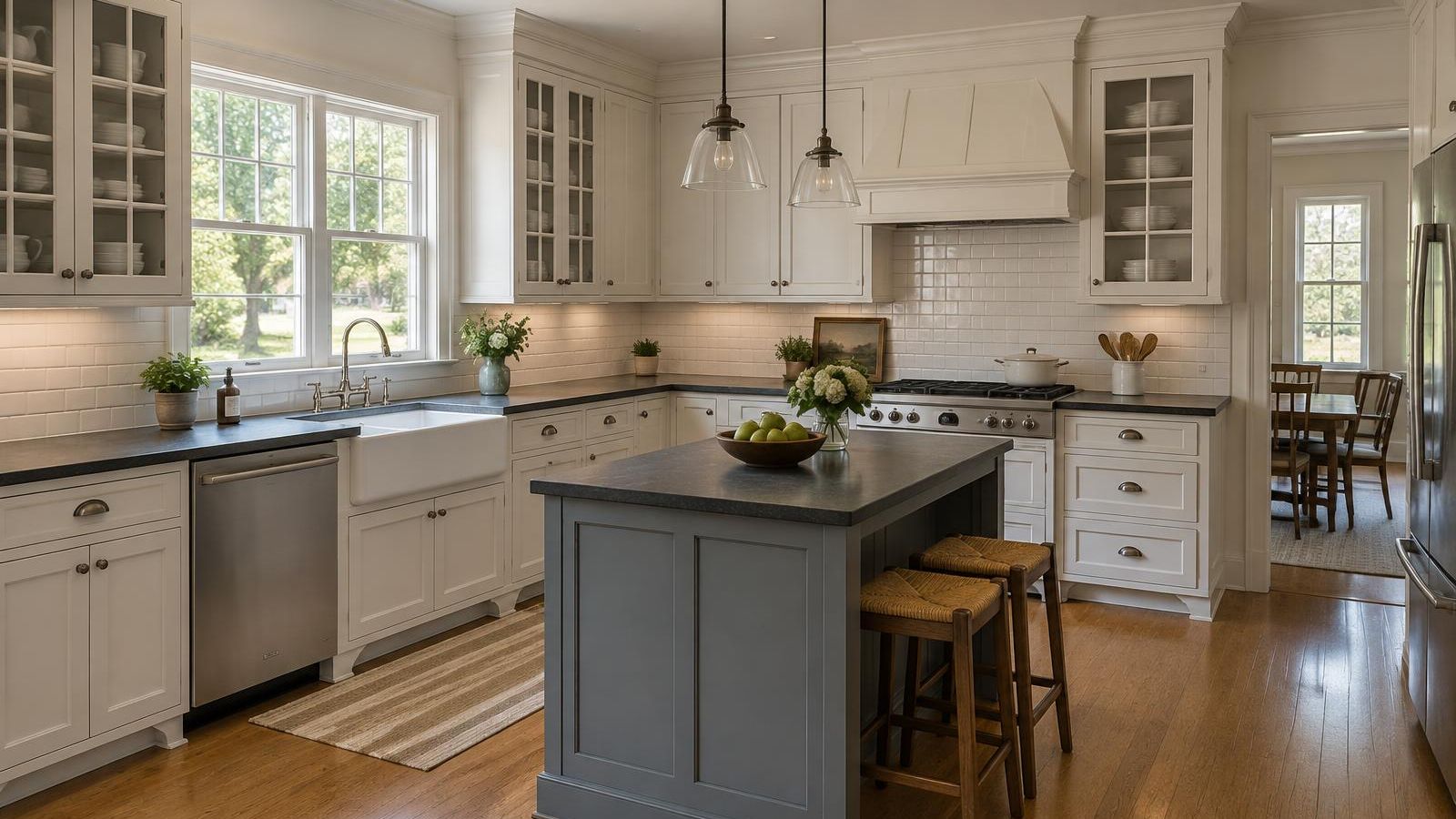
A Colonial Revival kitchen leans on painted cabinets in warm whites, plain panel doors, glass-front uppers and quiet white walls. Colonial Revival taste climbed again in the 1950s, and during the 1970s colonial styles ruled the furniture and homebuilding industries.1 In Fairfax County, 55%2 of homes were built from 1960 through 1989.
Updated October 11, 2026
What defines the look
- Painted cabinets
- The enameled white kitchen was a standard from about 1910 through the 1940s: white cabinets and tile suited the era's concern with sanitation, and oil-based enamel paint was hard-wearing and easy to clean.3
- Warm white, not bright white
- Historically, the white chosen for a kitchen was an off-white such as cream, bisque or light coffee, or a white tinged with yellow, pink or grey; bright white was normally reserved for bathrooms.3
- Inset doors and divided-light glass
- Old House Journal's featured kitchen for a 1920 Colonial Revival house uses plain, hand-painted inset cabinets and wood-and-glass doors with true divided lights.3
- Soapstone and nickel
- The same 1920 Colonial Revival kitchen pairs its painted cabinets with soapstone counters and brushed-nickel hardware.3
- Raised panels and crown molding
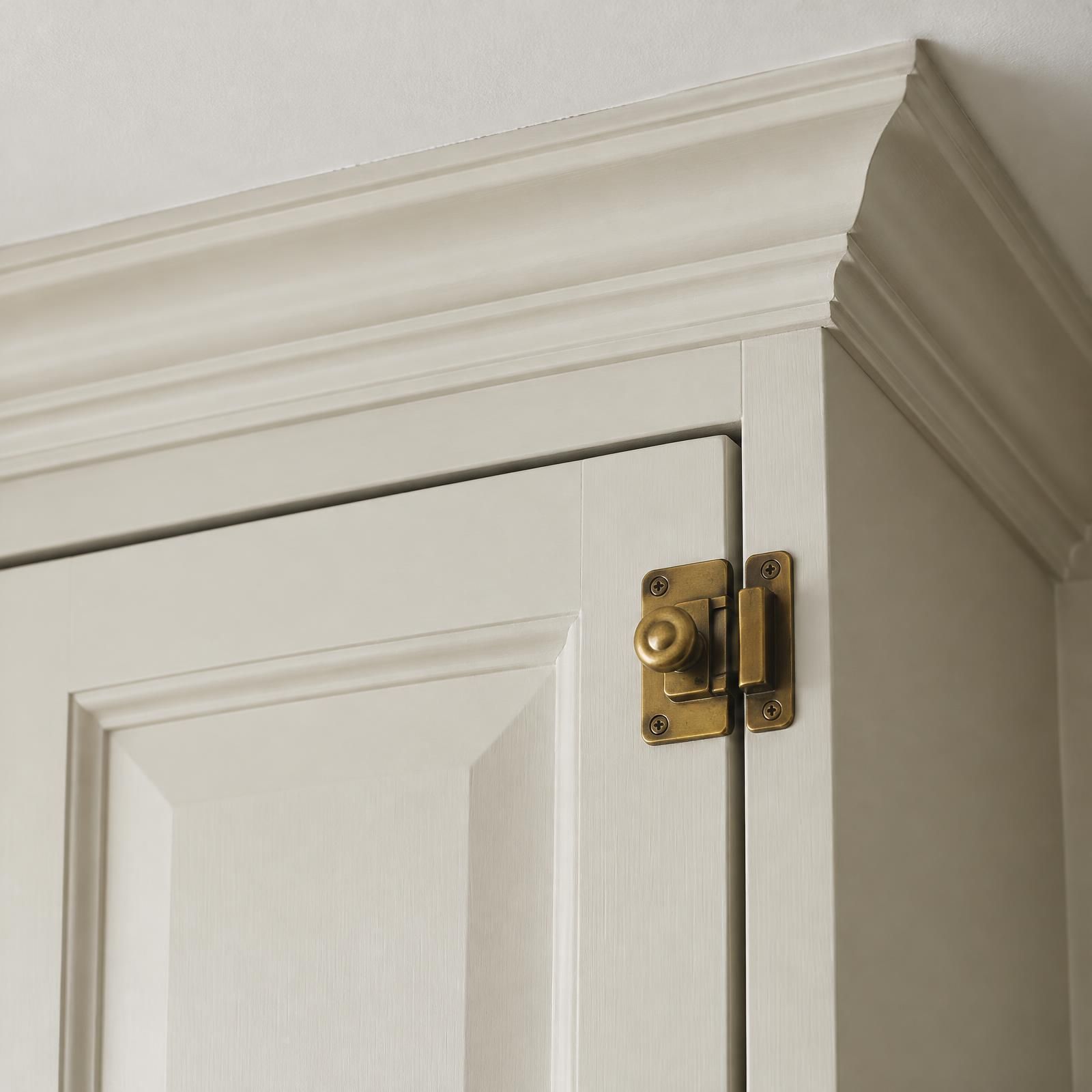
- In one Old House Journal kitchen designed to look old, reproduction hardware, a simple raised-panel design and crown molding let new cabinets sit comfortably in an old-style room.4
- Plain white walls
- Colonial Revival houses favored plain white interior walls, meant to suggest purity, rather than the wallpaper or colored paint actual colonists preferred.1
- Lanterns and candle-style light
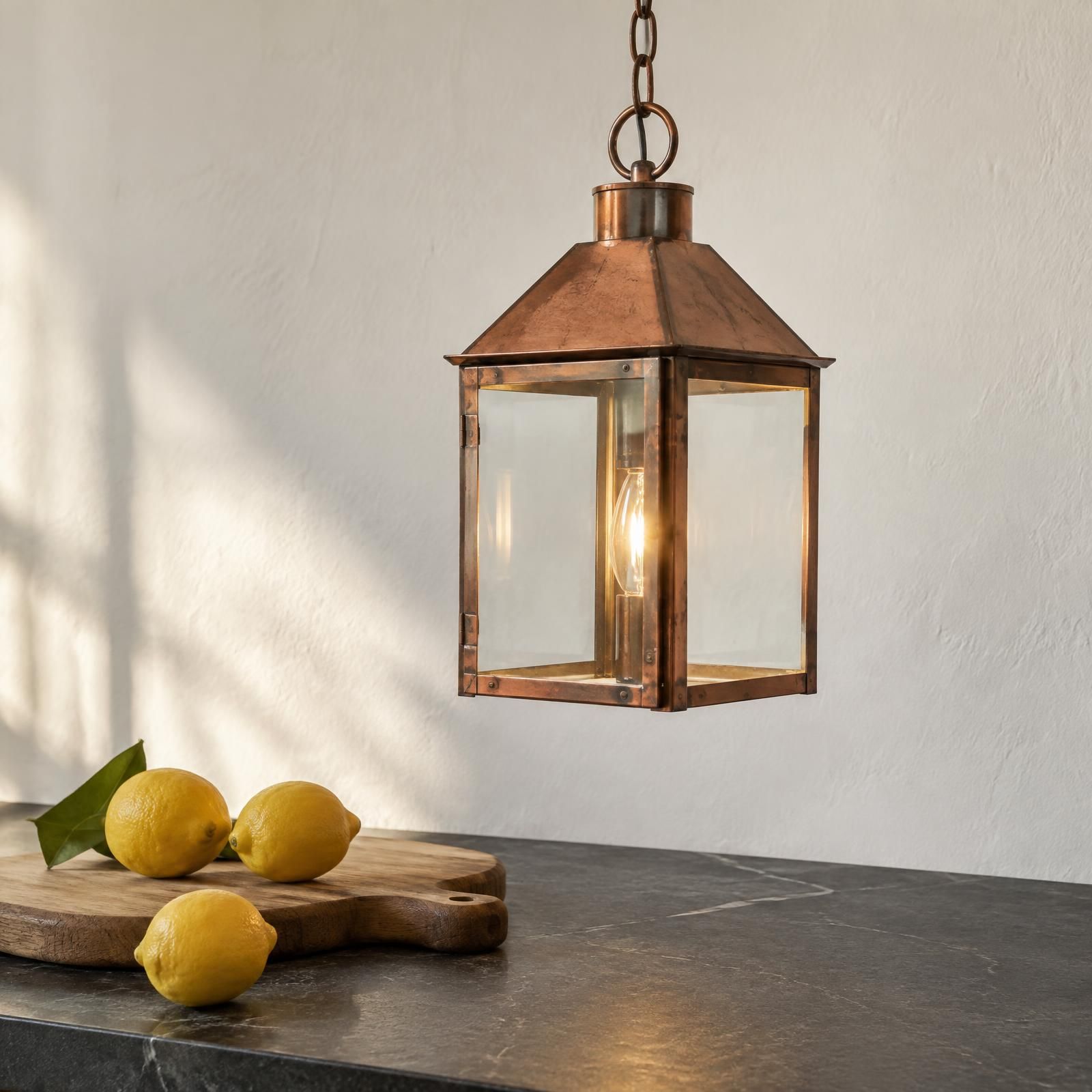
- Old House Journal dates Colonial lighting styles to before 1820 and lists copper lanterns, chandeliers with faux tapers, onion lamps and mirrored sconces among their forms.3
- Millwork borrowed from the dining room
- For cabinets and millwork in an old-house kitchen, Old House Journal suggests taking design cues from the dining room, or from a vintage pantry in the house or the neighborhood.3
Before you start
The Colonial Revival was never meant to be historically accurate; the architect of Carter's Grove in Virginia said the house was meant to be comfortable, not a museum.1 That's freeing. The goal is a kitchen that feels at home in the house, with a modern layout and appliances, not a museum room.
When adding new cabinetwork, use the design vocabulary that matches the house's age, style and formality, and when in doubt, simplify rather than embellish.4 In a plain postwar colonial, that usually means simple doors and trim that match the rest of the house rather than heavy carving.
EPA's lead renovation rule requires anyone paid to disturb painted surfaces in a home built before 1978 to be lead-safe certified, and the EPA says about three-quarters of U.S. homes built before 1978 still contain some lead-based paint.5 Painted cabinets, trim and window sills are exactly the surfaces a kitchen remodel disturbs, so ask about lead-safe work before demolition in an older house.
Where these kitchens are
Northern Virginia's suburbs are the clearest fit. In Fairfax County, 55%2 of homes were built from 1960 through 1989, and 46%6 are detached houses. The postwar Neo-Colonial Revival house is usually a much plainer version of the style, with a few Colonial details such as a door surround, shutters and symmetrical sash windows applied to a simple boxy form.7 Remodeling costs and permit rules in Northern Virginia
The style runs deeper in the region's older neighborhoods. In Virginia, leading architects such as Duncan Lee and William Lawrence Bottomley designed many Colonial Revival houses patterned on the great Tidewater plantations.1 Across the Richmond metro, 9%2 of homes were built before 1940. By the late 1930s, Baltimore builders were using red brick again for Colonial Revival houses and rowhouses.8 Kitchen remodeling in Baltimore
The Colonial Revival is so firmly established that it has become the default style of American architecture and home furnishings.1 For costs and project types, start with kitchen remodeling.
Talk through your Colonial Revival kitchen
Calls are recorded. You'll be connected to one independent company that handles kitchen remodels in your area. We never call or text you. Privacy Policy ·Do Not Sell or Share My Personal Information
Sources
Page updated October 11, 2026. How we source our numbers
- Colonial Williamsburg Foundation, The Colonial Revival: The Past That Never Dies (Colonial Williamsburg Journal, Summer 2002). Released 2002. View source. Industry source.
- U.S. Census Bureau, American Community Survey 2020–2024 5-year, table B25034. Released January 29, 2026. Fairfax County, VA, Richmond, VA metro.
- Old House Journal, Renovation Lookbook 2025 (issue articles on Zinio). Released 2025. View source. Industry source.
- Old House Journal, May/June 2023 issue (articles on Zinio). Released 2023. View source. Industry source.
- U.S. Environmental Protection Agency, Lead Renovation, Repair and Painting Program. Released June 17, 2026. View source.
- U.S. Census Bureau, American Community Survey 2020–2024 5-year, table B25024. Released January 29, 2026. Fairfax County, VA.
- Pennsylvania Historical and Museum Commission, Pennsylvania's Historic Suburbs field guide: Neo-Eclectic. No publication date. View source.
- Baltimore Heritage, Anatomy of a Baltimore Rowhouse. Released August 19, 2016. View source. Industry source.