Rental conversions in Baltimore
We found no credible Baltimore price for turning a basement or upper floor into a rental unit; the closest figure is the $166,4061 national cost of a new detached cottage in the 2025 Cost vs. Value report. The bigger local factor is the rulebook: 52%2 of occupied homes in Baltimore city are rented, every one of those units has to be licensed, and the city's zoning code allows a house to be split into more units only in certain districts.
Calls are recorded. One independent company that handles rental conversions in the Baltimore area answers.
Updated October 11, 2026
How much of Baltimore rents, and for what
Census figures on who owns and who rents, and on the median monthly rent including utilities, for the city and the wider metro.
| Measure | Baltimore city | Metro |
|---|---|---|
| Homes occupied by renters | 52%2 | 33%2 |
| Median gross rent, per month | $1,3313 | $1,6113 |
The city has a much larger share of renters than the metro around it, but a lower median rent. Run the numbers for your block before you borrow for a conversion, since a city unit may rent for less than a suburban one.
What kinds of buildings are already here
The Census Bureau counts homes by how many units share the building. Small multi-unit buildings and rowhouses are both far more common in the city.
| Measure | Baltimore city | Metro |
|---|---|---|
| Homes in buildings with two to four units | 10%4 | 4%4 |
| One-unit attached homes, such as rowhouses | 50%4 | 28%4 |
Small apartment buildings make up a bigger part of the city's housing than the metro's, but what the house next door did doesn't settle whether your lot can add a unit. The zoning district does.
How old the rental stock is
Census counts of homes by the decade they were built. Age matters more for a rental than for an owner's own house, because of Maryland's lead law.
| Measure | Baltimore city | Metro |
|---|---|---|
| Homes built before 1940 | 41%5 | 15%5 |
| Homes built before 1980 | 82%5 | 56%5 |
Maryland requires residential rental properties built before 1978 to be registered with the Department of the Environment every year, at $30 per unit, and to get a new lead inspection certificate at each change of occupancy.6 With so much of the city built before 1940, a Baltimore conversion should assume that rule applies until a lead inspection says otherwise.
What homes are worth here
A conversion is usually paid for out of the house's own value, so it helps to know where yours sits.
Permits
A rental conversion goes through zoning before it goes through building permits. In the city, adding a unit is a change of use that the permit office refers to zoning, and only some districts allow it at all. In the county, a family accessory apartment has its own use permit and recorded declaration. After that come the ordinary trade permits for the new kitchen, bath and wiring, and a rental license before anyone moves in.
- Baltimore City requires a permit to change the use of land or of any structure, and some permits are referred to the zoning office or another agency for review before they can be approved.8
- Baltimore City's zoning code allows a single-family dwelling to be converted into a multi-family dwelling only in the R-7, R-8, R-9 and R-10 districts, and in R-7 and R-8 the conversion also needs conditional-use approval by ordinance of the Mayor and City Council.9
- City permits are applied for online through E-Permits; some projects need a plan review, and properties in historic districts need a special referral.8
- Changing, installing or replacing plumbing, electrical, gas or mechanical systems needs a permit and a licensed contractor; for one- and two-family homes the contractor also needs a Maryland Home Improvement Commission license.8
- Baltimore County requires a permit for any addition, alteration or structural modification to an existing home, including creating a new bedroom or kitchen.10
- A Baltimore County accessory apartment needs a Declaration of Understanding recorded in the county land records, an apartment in a detached accessory building also needs a special hearing, and when the use permit ends the second kitchen has to come out.11
Checked October 11, 2026
Talk to a pro who handles rental conversions in Baltimore
Calls are recorded. You'll be connected to one independent company that handles rental conversions in your area. We never call or text you. Privacy Policy ·Do Not Sell or Share My Personal Information
Where a Baltimore house can become two homes
Baltimore City's zoning code allows a single-family dwelling to be converted into a multi-family dwelling only in the R-7, R-8, R-9 and R-10 districts, and in R-7 and R-8 the conversion also needs conditional-use approval by ordinance of the Mayor and City Council.9 A converted Baltimore City house must still meet its district's bulk and yard rules, including lot area per dwelling unit, may not break the city's dwelling occupancy rules, and must keep the residential character of its exterior.12
That means the first call is to the city's zoning office, with your address, to learn your district and how much lot area each unit needs. A narrow rowhouse lot may fall short of that figure even where conversions are allowed.
State law is changing the picture for detached houses. Maryland's HB 1466, passed in 2025, requires every county and municipality with planning and zoning authority to adopt a local law allowing ADUs on lots with a single-family detached house by October 1, 2026.13 When we checked, neither Baltimore City nor Baltimore County had posted an adopted ADU ordinance under that law, so ask the zoning office what applies to your lot on the day you apply.
Accessory apartments in Baltimore County
Baltimore County has its own route, built around family rather than tenants. Baltimore County allows an accessory apartment only on owner-occupied property, with the owner living in either the main house or the apartment, and the people in both must be family, related by blood, marriage or adoption.11
A Baltimore County accessory apartment needs a Declaration of Understanding recorded in the county land records, an apartment in a detached accessory building also needs a special hearing, and when the use permit ends the second kitchen has to come out.11 The county's guide for this dates from 2023, so confirm with Permits, Approvals and Inspections that the rules haven't changed before you draw plans.
Rental licenses on both sides of the city line
In the city: Baltimore City requires every residential rental unit, including one- and two-family dwellings, to be registered, inspected and licensed.14 The inspection for a Baltimore City rental license must be done by a state-licensed home inspector registered with the city, who sets the fee, and initial licenses are issued for two years.14
In the county: Most rental housing in Baltimore County, short-term rentals included, must be registered and licensed before a tenant moves in, and the license is valid for three years.15 In Baltimore County every rental property with six or fewer units must be inspected by a state-licensed home inspector, and the license fee is $48 per unit for an owner-occupied home with one or two tenants and $60 per unit for one that isn't owner-occupied.16
Book the rental inspection for after the construction inspections are signed off, and keep the final permit approvals handy, since the inspector will be looking at the same smoke alarms, exits and wiring.
Lead, fire separation and a way out
EPA's lead renovation rule generally doesn't cover homeowners working on their own pre-1978 homes, but it does apply if you rent out all or part of your home.17 For a city rowhouse built before 1978, that applies to the conversion work itself, and the state's registration and certificate rules apply once a tenant moves in.
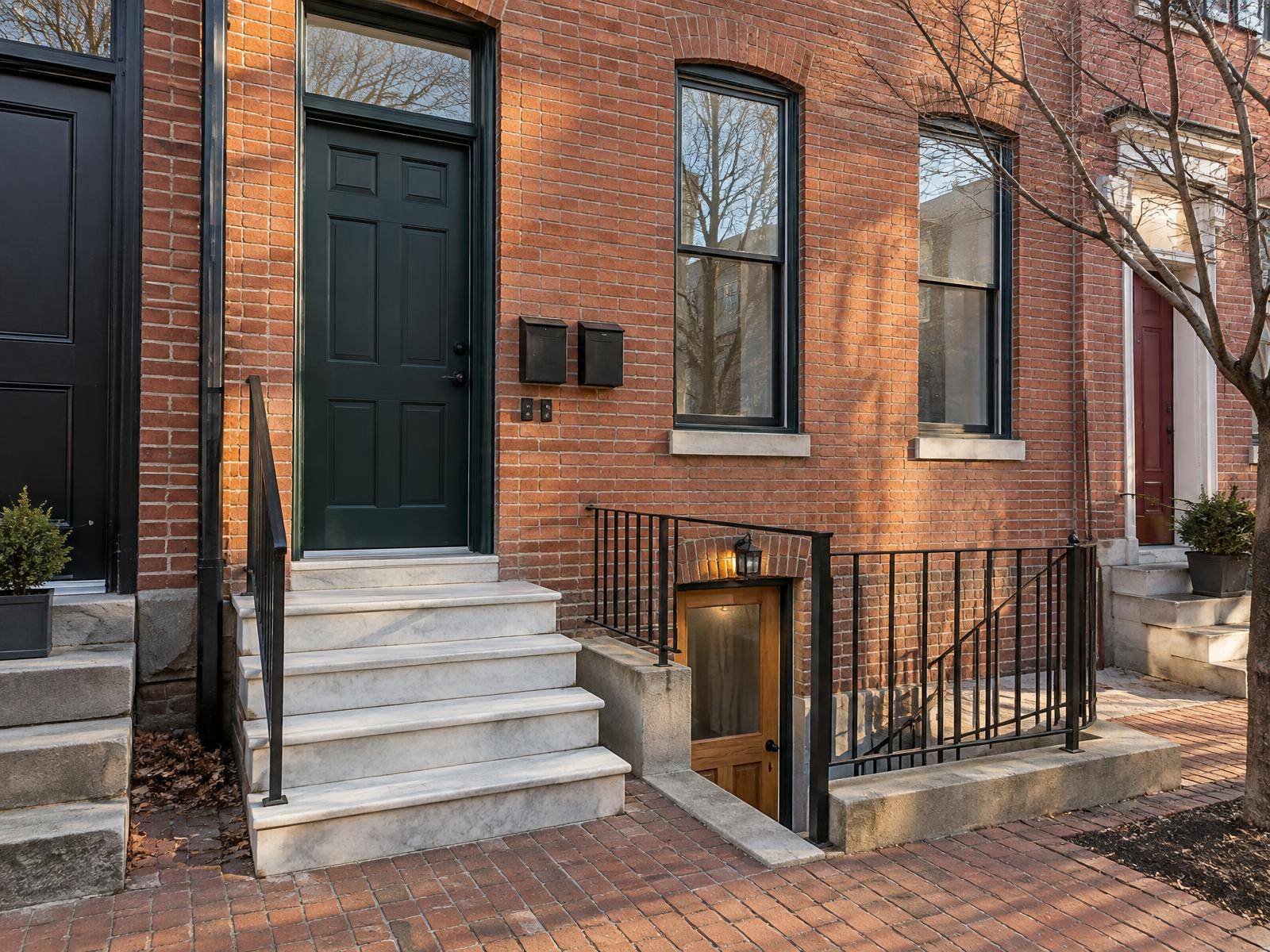
The 2021 IRC requires the units of a two-family dwelling to be separated by walls and floors with at least a 1-hour fire-resistance rating, or a 1/2-hour rating if the building has an automatic sprinkler system throughout.18 In a rowhouse, the floor between a basement unit and the house above is usually the separation, so expect a new fire-rated ceiling below the first floor.
The 2021 IRC requires at least one egress door for each dwelling unit, reached by a continuous path that does not pass through a garage, and opening to a public way or a yard or court that leads to one.18 For a basement unit, that often means a door at the foot of an areaway at the front or back of the house. The 2021 IRC requires smoke alarms in each sleeping room, outside each separate sleeping area and on every story including basements, interconnected within each dwelling unit so that one sounding sets off all of them.18
A unit an older relative can live in
Some conversions are meant for a parent rather than a tenant, and the county's family-only accessory apartment rule is built for exactly that. More than one in four adults 65 and older fall each year.19
If the unit is for someone older, plan it without steps where you can: a first-floor or rear unit at grade, a curbless shower and a wide door. A basement apartment reached by outside steps is harder to live in with a walker. Ask whether the company has done aging-in-place work. NAHB's Certified Aging-in-Place Specialist (CAPS) credential trains remodelers in home modifications for aging in place.20
What happens when you call
You call the number on this page. The call is recorded, and it goes to one independent company that handles rental conversions in the Baltimore area. You talk with them directly about the unit, the construction and the price.
We are paid for the call. You don't pay us anything, and we never call or text you. How we make money
After you're connected
Before you sign a contract, look the company up on the state's own site. Maryland's Home Improvement Commission licenses home improvement contractors and salespersons, and its License Search shows whether a license is current.21 Check a Maryland license
Questions people ask
Can I turn my Baltimore rowhouse into two apartments?
Only in some zoning districts, and not always as of right. Baltimore City's zoning code allows a single-family dwelling to be converted into a multi-family dwelling only in the R-7, R-8, R-9 and R-10 districts, and in R-7 and R-8 the conversion also needs conditional-use approval by ordinance of the Mayor and City Council.9 The house also has to meet the district's lot-area-per-unit rule, so check with the city's zoning office before paying for drawings.
Can I rent out an in-law apartment in Baltimore County?
Under the county's accessory apartment rules, the apartment is for family. Baltimore County allows an accessory apartment only on owner-occupied property, with the owner living in either the main house or the apartment, and the people in both must be family, related by blood, marriage or adoption.11 Ask the county whether newer rules under the state ADU law apply to your lot.
Do I need a rental license for one unit in my house?
Yes in the city, and in most cases in the county. Baltimore City requires every residential rental unit, including one- and two-family dwellings, to be registered, inspected and licensed.14 Most rental housing in Baltimore County, short-term rentals included, must be registered and licensed before a tenant moves in, and the license is valid for three years.15
What lead rules apply to a Baltimore rental?
Maryland requires residential rental properties built before 1978 to be registered with the Department of the Environment every year, at $30 per unit, and to get a new lead inspection certificate at each change of occupancy.6 41%5 of the city's homes went up before 1940, decades ahead of that cutoff.
Sources
Page updated October 11, 2026. How we source our numbers
- Zonda / Journal of Light Construction, Cost vs. Value 2025, national. Released 2025. United States. Industry source.
- U.S. Census Bureau, American Community Survey 2020–2024 5-year, table B25003. Released January 29, 2026. Baltimore city.
- U.S. Census Bureau, American Community Survey 2020–2024 5-year, table B25064. Released January 29, 2026. Baltimore city.
- U.S. Census Bureau, American Community Survey 2020–2024 5-year, table B25024. Released January 29, 2026. Homes in two-unit buildings, Baltimore city, Housing units, Baltimore city, Baltimore-Columbia-Towson metro.
- U.S. Census Bureau, American Community Survey 2020–2024 5-year, table B25034. Released January 29, 2026. Baltimore city, Baltimore-Columbia-Towson metro.
- Maryland Department of the Environment, Lead Registration. No publication date. View source.
- U.S. Census Bureau, American Community Survey 2020–2024 5-year, table B25077. Released January 29, 2026. Baltimore city, Baltimore-Columbia-Towson metro.
- Baltimore City Department of Housing & Community Development, Building Permits. No publication date. View source.
- Baltimore City Department of Legislative Reference, Baltimore City Code, Article 32 (Zoning), § 9-701 Residential conversions: where allowed. No publication date. View source.
- Baltimore County Department of Permits, Approvals and Inspections, Addition, alteration or modification permits. No publication date. View source.
- Baltimore County Department of Permits, Approvals and Inspections, Accessory Apartment Application and Declaration of Understanding Guide. Released August 2023. View source.
- Baltimore City Department of Legislative Reference, Baltimore City Code, Article 32 (Zoning), § 9-703 Conversion standards. No publication date. View source.
- Maryland Department of Planning, Accessory Dwelling Units. No publication date. View source.
- Baltimore City Department of Housing & Community Development, Rental Licensing. No publication date. View source.
- Baltimore County Department of Permits, Approvals and Inspections, Rental Housing Registration. No publication date. View source.
- Baltimore County Department of Permits, Approvals and Inspections, Register or Renew Your Rental Property. No publication date. View source.
- U.S. Environmental Protection Agency, Lead Renovation, Repair and Painting Program. Released June 17, 2026. View source.
- International Code Council, 2021 International Residential Code, Chapter 3 Building Planning. Released 2021. View source. Industry source.
- Centers for Disease Control and Prevention, Facts About Older Adult Falls. Released September 4, 2026. View source.
- National Association of Home Builders, Certified Aging-in-Place Specialist (CAPS). No publication date. View source. Industry source.
- Maryland Department of Labor, Maryland Home Improvement Commission. No publication date. View source.