Rowhouse bathrooms
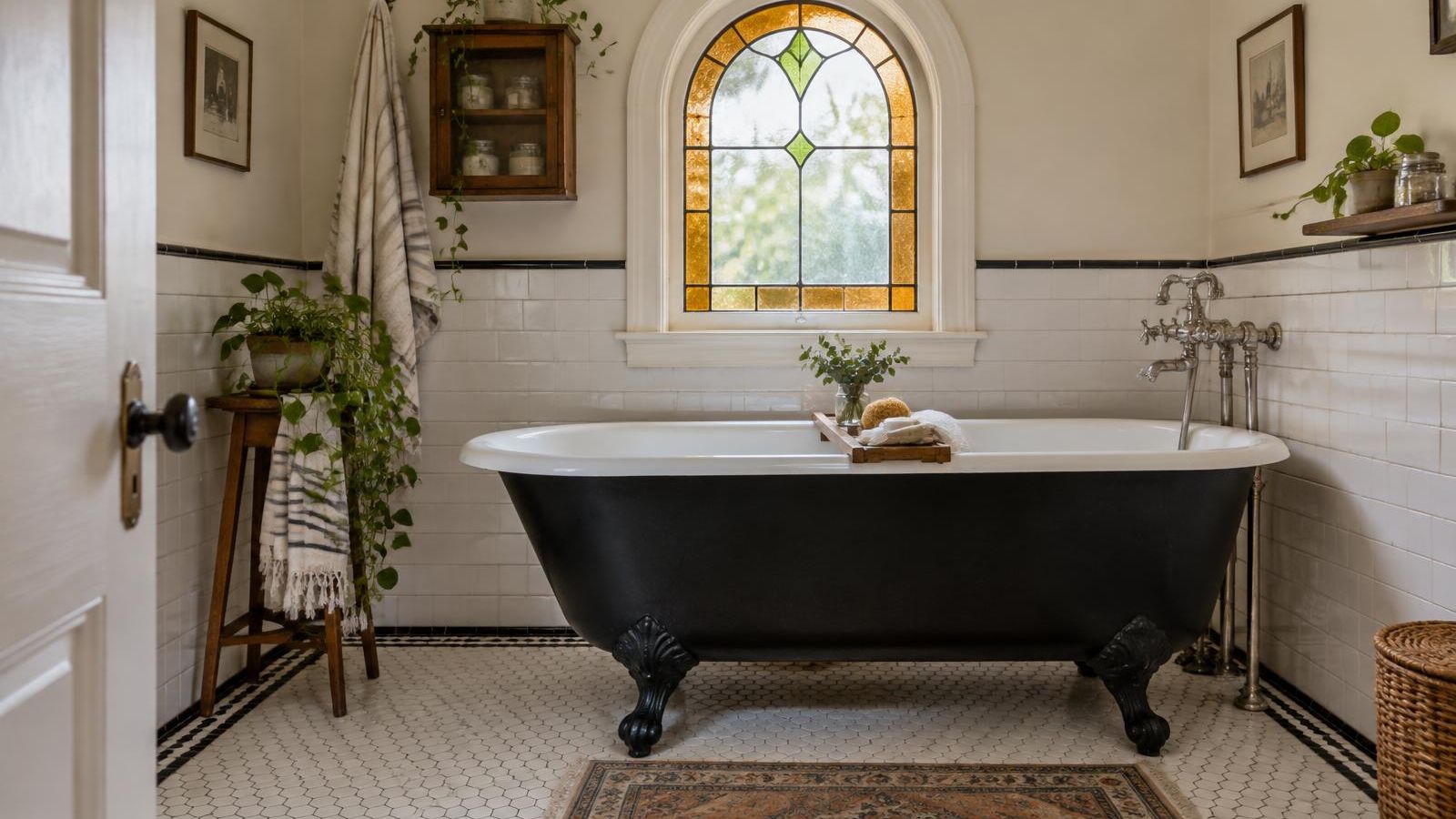
Rowhouse bathrooms from around 1900 are known for white glazed wall tile, small unglazed floor tile and clawfoot tubs, tucked onto the bedroom floor. In Baltimore city, 41%1 of homes were built before 1940, so many of these rooms are still in use.
Updated October 11, 2026
What defines the look
- Upstairs, on the bedroom floor
- In Brooklyn's late-1800s row houses, the bathroom went on the bedroom floor, away from the public rooms, and very few gave the toilet its own separate closet.2
- White glazed wall tile
- Toward 1900, tile became the bathroom wall covering of choice because plain white glazed tile was easy to clean and seen as sanitary; subway tile was especially popular, often with a band of colored or embossed accent tile.2
- Small unglazed floor tile
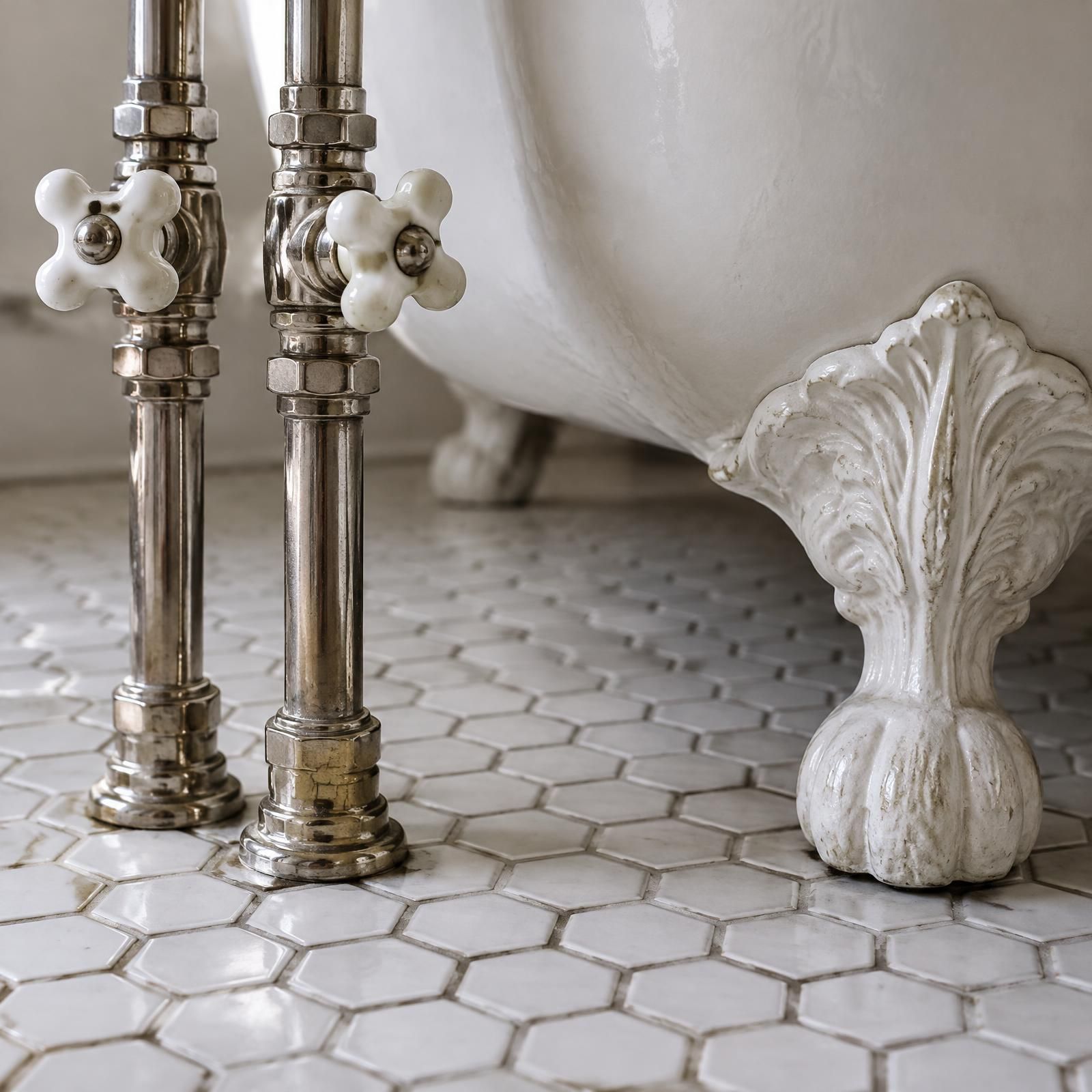
- In middle-class houses of the era, bathroom floors were usually unglazed white tile, often hexagons or squares, sometimes with black accent tiles.2
- The clawfoot tub
- Enameled cast-iron clawfoot tubs became the tub of choice by 1885 and stayed in fashion until the 1920s, when the double-walled enameled tub became the next new thing.2
- Plumbing left on show
- Bathrooms of the period left their nickel-plated supply pipes exposed, both to show off the new plumbing and to make repairs easier.2
- Stained glass and skylights
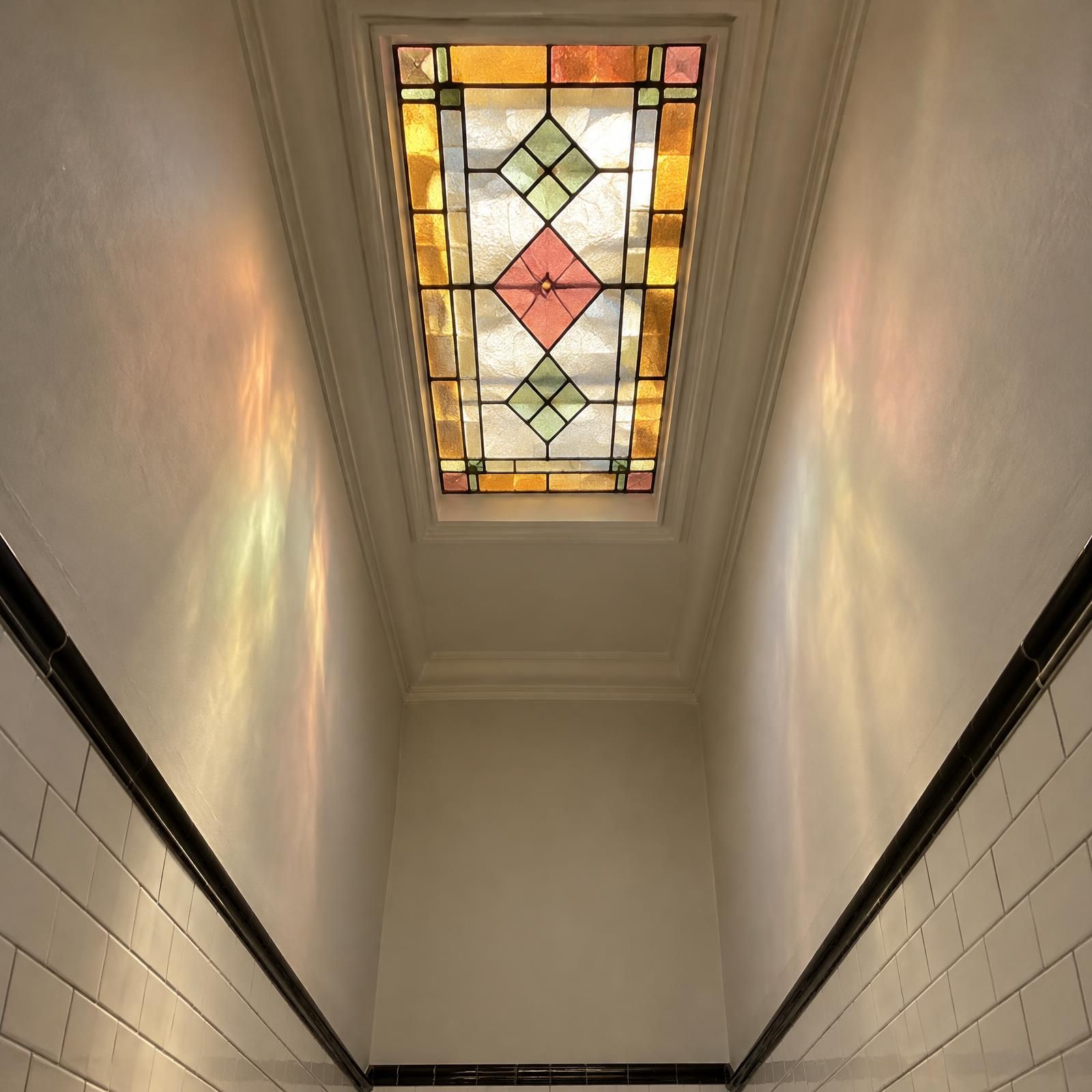
- Around 1900, Baltimore builders put stained glass into rowhouses from working-class blocks to mansions, in all shapes and sizes, including skylights.3
- A window in nearly every room
- Baltimore's later 'daylight' rowhouses were wider than earlier rows and gave nearly every room a window.3
Before you tear anything out
Old rows rarely give a remodeler a clean box to work in. Robert Hooke, who rehabbed two Baltimore dollar houses in 1974 and later became a mason, says rowhouses are harder to renovate than to build new, because nothing is square and nothing is plumb.3 Expect the tile layout, the vanity and the shower glass to be fitted to the room rather than the other way around.
Decide what is worth saving before demolition starts. The National Park Service advises keeping the visible features of early building systems, such as radiators, plumbing fixtures, switchplates and lights, even when the systems behind them are upgraded.4 Baltimore's city-run Salvage Depot once rescued clawfoot tubs, mahogany doors, mantels and other details from rowhouses slated for demolition, and similar pieces are still sold by local salvage outlets.3
New supply lines, drains and wiring don't have to scar the rooms you're keeping. The National Park Service recommends running new pipes, ducts and wiring as inconspicuously as possible, through secondary spaces, closets, the attic or the basement, so character-defining rooms and finishes aren't destroyed.4
If the house is in a listed historic district, a state tax credit may cover part of the work, but only if the rules are followed from the start. In Maryland: Maryland's Homeowner Tax Credit can return 20% of eligible rehabilitation costs, capped at $50,000 in a 24-month period, on an owner-occupied house that is a certified historic structure; plumbing work and restoring interior finishes can qualify, but work that is primarily remodeling usually does not.5 The Maryland Historical Trust must approve the work before it begins; work started before review won't qualify and can put the credit for the whole project at risk.5
In Virginia: Virginia's state historic rehabilitation tax credit, open to owner-occupied homes, equals 25% of eligible rehabilitation expenses for a certified historic structure, such as a contributing building in a listed historic district, if the whole project meets the Secretary of the Interior's Standards.6 Virginia's Department of Historic Resources lists new plumbing systems and updating kitchens and bathrooms among eligible expenses, while appliances and additions are not.6
Where these bathrooms are
We publish style guides where Census data shows the houses exist. In Baltimore city, 50%7 of homes are single-family attached houses, the Census category that takes in rowhouses, and 41%1 were built before 1940. Bathroom remodeling in Baltimore
Richmond's rows are a smaller part of its housing: attached single-family houses are 8%7 of the city's homes, while 28%1 were built before 1940. Many of its rowhouses stand in the Fan. Richmond's Fan Area Historic District, nearly a hundred city blocks of turn-of-the-20th-century town houses with more than two thousand buildings, is listed on the Virginia Landmarks Register and the National Register.8 Bathroom remodeling in Richmond
For costs and project types anywhere in the region, start with bathroom remodeling.
Talk through your rowhouse bathroom
Calls are recorded. You'll be connected to one independent company that handles bathroom remodels in your area. We never call or text you. Privacy Policy ·Do Not Sell or Share My Personal Information
Sources
Page updated October 11, 2026. How we source our numbers
- U.S. Census Bureau, American Community Survey 2020–2024 5-year, table B25034. Released January 29, 2026. Baltimore city, Richmond city, Virginia.
- Brownstoner, From Pakistan to Brooklyn: A Quick History of the Bathroom. Released November 28, 2016. View source. Industry source.
- Baltimore Magazine, Anatomy of a Baltimore Rowhome. Released June 12, 2025. View source. Industry source.
- National Park Service, Technical Preservation Services, Preservation Brief 18: Rehabilitating Interiors in Historic Buildings. Released 1988. View source.
- Maryland Historical Trust, Homeowner Tax Credit. Released April 10, 2026. View source.
- Virginia Department of Historic Resources, Historic Rehabilitation Tax Credits. No publication date. View source.
- U.S. Census Bureau, American Community Survey 2020–2024 5-year, table B25024. Released January 29, 2026. Baltimore city, Maryland, Richmond city, Virginia.
- Virginia Department of Historic Resources, Fan Area Historic District (127-0248). Released June 22, 2026. View source.