Whole-home remodeling in Montgomery County
Cost vs. Value has no whole-house project, but its 2025 Washington, DC figures for the rooms such a job usually touches add up quickly: $79,9881 for a major midrange kitchen, $25,9361 for a midrange bath and $52,7571 for a basement remodel. In Montgomery County the factor that sets the pace is the inspection order, because the county won't close in walls or sign a final until WSSC Water has passed the plumbing and gas, so every phase runs on two agencies' calendars.
Calls are recorded. One independent company that handles whole-home remodels in the Montgomery County area answers.
Updated October 11, 2026
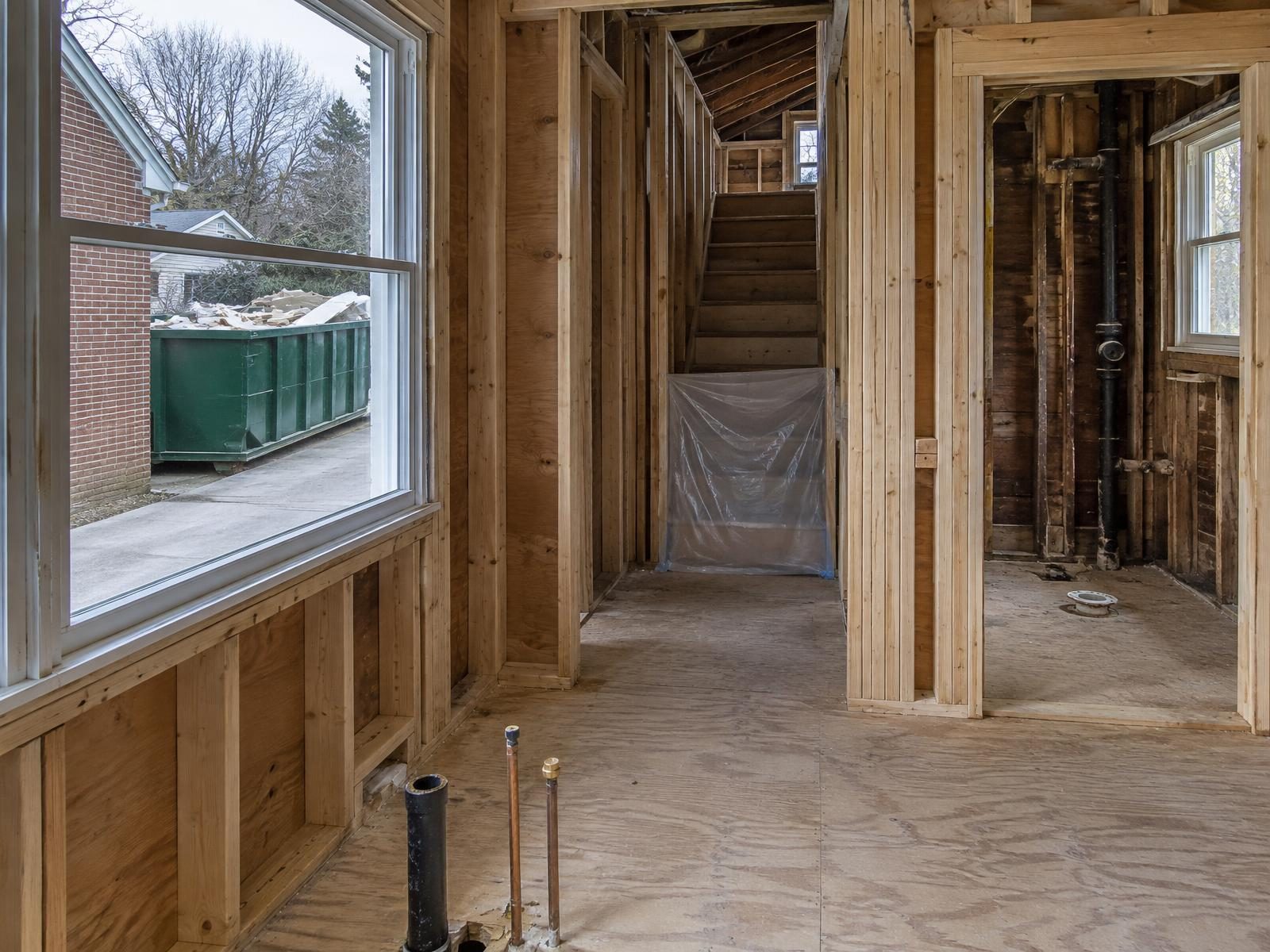
Pricing the rooms one at a time
Cost vs. Value prices single projects, not whole houses, and has no Montgomery County market. These rows are the separate jobs a full renovation tends to bundle, from its 2025 Washington, DC page, set beside the national averages.
| Measure | Washington, DC market | U.S. average |
|---|---|---|
| Major kitchen remodel, midrange, job cost | $79,9881 | $82,7932 |
| Midrange bathroom remodel, job cost | $25,9361 | $26,1382 |
| Basement remodel, job cost | $52,7571 | $52,0122 |
| HVAC conversion (electrification), job cost | $20,2781 | $19,4841 |
The kitchen and bath come in slightly under the national figures in this market, while the basement and the electrification job run a little over. Ask for every room and every system on its own line, so one phase can be moved or dropped without reopening the whole contract.
Which era the house comes from
A whole-house job opens walls from several decades of repairs at once, so the year the house went up matters more than it does for one room. Census counts show the county building a larger share of its homes than the metro did both after the war and in the 1980s.
| Measure | Montgomery County | Washington metro |
|---|---|---|
| Homes built before 1980 | 49%3 | 45%3 |
| Homes built 1950–1969 | 25%3 | 20%3 |
| Homes built 1980–1989 | 19%3 | 15%3 |
About half the county's homes predate 1980, so expect original wiring, plaster or old supply piping in at least one room. A house from the 1980s is more likely to have sound but original systems, and a full renovation is often when its panel, ductwork and windows all come due together.
How much house there is to renovate
The Census Bureau counts rooms rather than square feet: bedrooms, kitchens, living and dining rooms and finished recreation rooms, but not bathrooms, halls or unfinished basements. A larger share of the county's homes sit at the top of that scale than across the metro.
What the house is worth against the job
A renovation that reaches every room has to be weighed against the value of the whole house, not a single kitchen. At the median, owner-occupied homes in the county are worth more than those across the Washington metro.
Detached houses and townhouses
Much of a whole-house job's difficulty comes from what the house shares. A detached house can be worked side to side and floor to floor, while a townhouse shares walls with its neighbors and often an association's rules as well.
| Measure | Montgomery County | Washington metro |
|---|---|---|
| Single-family detached homes | 47%5 | 44%6 |
| Townhouses and other attached single-family homes | 18%5 | 20%6 |
Montgomery County's homeowner permit guide does not cover municipal or homeowner association rules, and says work that is exempt from permits must still meet the building code.8 In a townhouse community, read the association's rules on exterior changes, deliveries and work hours before the schedule is set.
Which trades carry the job
BLS publishes these wages for the whole Washington metro, not for the county. On a whole-house job the carpenters stay longest, while electricians and WSSC Water-licensed plumbers come back in rounds as each phase opens up.
| Measure | Washington metro | United States |
|---|---|---|
| Carpenters, median hourly wage | $29.23/hr9 | $29.12/hr9 |
| Electricians, median hourly wage | $36.50/hr9 | $30.38/hr9 |
| Plumbers, median hourly wage | $34.55/hr9 | $30.67/hr9 |
Electricians carry the widest premium over their national median here. Rewiring several floors in one planned visit, rather than a room at a time, cuts down on return trips at that rate.
Permits
A whole-house renovation in most of Montgomery County runs on one building permit from the Department of Permitting Services, an electrical permit pulled by a master electrician, a mechanical permit for any change to heating or cooling, and WSSC Water permits for plumbing and gas. When the plan adds space as well as reworking what is there, the county files both under a single combined permit. Rockville, Gaithersburg and several towns add their own approval, so confirm the office before the drawings are finished.
- Montgomery County requires a permit before any reconstruction or renovation of an existing structure other than a repair, and reconstruction includes partial demolition and rebuilding.10
- Montgomery County issues a combined Add/Alter permit for a project that includes both an alteration and an addition; inspections are requested at least 24 hours ahead, and the permit and approved drawings stay on site until the work is finished.10
- In Montgomery County an electrical permit is applied for online by a master electrician licensed by the Maryland State Board of Electricians and is issued once the parent building permit has been; homeowners who qualify can instead pass a county exam to get a permit for limited work on their own home.11
- Montgomery County requires a mechanical permit to install, alter or replace a heating, ventilating or air-conditioning system regulated by the mechanical, fuel-gas or residential codes, and names range hoods among the equipment covered.12
- County inspectors won't conduct a close-in or final inspection without an approved WSSC Water rough-in or final inspection, and the framing, rough wiring and mechanical inspections are requested together.13
- Homeowners may apply for an alteration permit in their own name, but when a contractor does the work the county strongly suggests listing the contractor as the responsible party, and a contractor must hold a Maryland Home Improvement Commission license to obtain a permit.10
- The cities of Rockville and Gaithersburg issue their own permits instead of the county, and several towns, including Takoma Park, Kensington and Chevy Chase Village, require their own approval along with the county permit.14
Checked October 11, 2026
Talk to a pro who handles whole-home remodels in Montgomery County
Calls are recorded. You'll be connected to one independent company that handles whole-home remodels in your area. We never call or text you. Privacy Policy ·Do Not Sell or Share My Personal Information
Opening up a postwar or 1980s house
25%3 of the county's homes were built from 1950 through 1969, many of them brick colonials, Cape Cods and ramblers with plaster walls. Unless a lead-based paint inspection shows otherwise, the EPA says to treat paint in homes built before 1978 as if it contains lead.15 A job that sands, cuts or tears out in room after room needs a crew that sets up lead-safe practices in each one. For homes built before 1978, the EPA advises hiring contractors who use only lead-safe certified renovators.16
The EPA lists vinyl floor tile, vinyl sheet backing and flooring adhesives among products that may contain asbestos, which is released mainly when the material is disturbed.17 Old resilient tile hiding under carpet and wrapped pipes in the basement are both worth sampling before the demolition date is set. The EPA advises having an accredited asbestos professional inspect before a remodel that could disturb suspect materials, and not sanding or power-stripping suspect flooring yourself.18
In the county's historic districts, the review covers the outside of the house. In Montgomery County, substantive exterior changes to a historic site, such as replacing windows or doors, need a Historic Area Work Permit, while interior work does not; the permit doesn't replace a county building permit.19 Ask early whether new windows or doors are part of the plan, since that is what brings the historic review into a whole-house job.
How the inspections pace the work
Montgomery County's framing (close-in) inspection checks framing, fire and draft stopping, air sealing of the thermal envelope and sealed trade penetrations, and must be approved before insulation is installed.13 County inspectors won't conduct a close-in or final inspection without an approved WSSC Water rough-in or final inspection, and the framing, rough wiring and mechanical inspections are requested together.13 On a renovation that moves through the house in phases, each phase waits for both inspectors before drywall can go up, so ask the company to show both on the schedule.
WSSC Water's plumbing and gasfitting regulations require most plumbing projects in Montgomery and Prince George's counties, including interior re-piping and all gas work, to be done by a WSSC Water-licensed plumber or gasfitter.20 WSSC Water says its code requires the plumber or gasfitter to warranty the work for one year inside the building, counted from the date of final inspection approval.21 Keep each phase's WSSC Water final with the county's paperwork, because the plumbing warranty clock starts there.
The county's final inspection confirms that attic, basement and crawl-space insulation is installed, smoke detectors work and the street address is posted, and it must be approved before the space is occupied or used.13 When alterations, repairs or additions that need a permit are made, the 2021 International Residential Code requires the home to have smoke alarms where a new house would, including in each bedroom, outside each sleeping area and on every story; exterior-only work and plumbing or mechanical work are exempt.22 Expect alarms in rooms the plan never touched.
Living in the house while it's torn up
For very dusty work such as demolition, the EPA describes isolating the work area: sealing it off with no direct access to the occupied rooms, with workers using a separate entrance until cleanup is done.15 In a two-story colonial the usual answer is to finish one floor while living on the other, which only works if a bathroom and a sink stay in service on the floor you're using.
Montgomery County has been designated a Zone 1 radon area, meaning a predicted average indoor level at or above the EPA's 4.0 pCi/L action level, and the county says every home in Montgomery County should be tested for radon.23 If the basement is opening up as part of the job, test it before the framing goes in; a vent pipe is far easier to run through open walls. The EPA recommends testing for radon before remodeling a basement, because fixing a radon problem is usually easier and less expensive before the basement is finished.16
Building in room to stay
More than one in four adults 65 and older fall each year.24 With walls already open on several floors, it costs little extra to add blocking for future grab bars, widen a hall doorway or rough in a full bath on the entry level. NAHB's Certified Aging-in-Place Specialist (CAPS) credential trains remodelers in home modifications for aging in place.25
Montgomery County has a property tax credit program, Design for Life, to help pay for making a home more accessible, with eligible features such as a no-step entrance, 32-inch doorways, accessible bathrooms and properly installed grab bars.26 The credit depends on the features being on the permit drawings, so raise it before plans are submitted, not after the job is built.
What happens when you call
The number on this page connects you, on a recorded line, with one independent company that handles whole-home remodels in the Montgomery County area. Which rooms, in what order, and at what price are settled between you and that company.
That company pays us for the call; you pay us nothing, and no one from our side will phone or text you later. How we make money
After you're connected
Before a deposit changes hands, look the company up yourself. Maryland's Home Improvement Commission licenses home improvement contractors and salespersons, and its License Search shows whether a license is current.27 Check a Maryland license
Then agree in writing who holds each permit. Homeowners may apply for an alteration permit in their own name, but when a contractor does the work the county strongly suggests listing the contractor as the responsible party, and a contractor must hold a Maryland Home Improvement Commission license to obtain a permit.10
Questions people ask
What does a whole-house renovation cost in Montgomery County?
No source we rely on prices the whole job. Cost vs. Value's 2025 Washington, DC figures put a major midrange kitchen at $79,9881, a midrange bathroom at $25,9361 and a basement remodel at $52,7571; your total is the rooms you choose plus the wiring, piping and heating work that ties them together.
Do I need one permit or two if I'm adding on and remodeling inside?
Montgomery County issues a combined Add/Alter permit for a project that includes both an alteration and an addition; inspections are requested at least 24 hours ahead, and the permit and approved drawings stay on site until the work is finished.10 The electrical, mechanical and WSSC Water permits are still separate from it.
Why can't the county inspector close in my walls yet?
County inspectors won't conduct a close-in or final inspection without an approved WSSC Water rough-in or final inspection, and the framing, rough wiring and mechanical inspections are requested together.13 Ask the plumber when WSSC Water's rough-in is booked before the county inspection is requested.
My house is in Takoma Park or Kensington. Is the county permit enough?
No. The cities of Rockville and Gaithersburg issue their own permits instead of the county, and several towns, including Takoma Park, Kensington and Chevy Chase Village, require their own approval along with the county permit.14 Check with the town before the county application goes in.
Sources
Page updated October 11, 2026. How we source our numbers
- Zonda / Journal of Light Construction, Cost vs. Value 2025, Washington, DC. Released 2025. Washington, DC. Industry source.
- Zonda / Journal of Light Construction, Cost vs. Value 2025, national. Released 2025. United States. Industry source.
- U.S. Census Bureau, American Community Survey 2020–2024 5-year, table B25034. Released January 29, 2026. Montgomery County, MD, Washington-Arlington-Alexandria metro.
- U.S. Census Bureau, American Community Survey 2020–2024 5-year, table B25017. Released January 29, 2026. Montgomery County, MD.
- U.S. Census Bureau, American Community Survey 2020–2024 5-year, table B25024. Released January 29, 2026. Montgomery County, MD.
- U.S. Census Bureau, American Community Survey 2020-2024 5-year, Table B25024 (Units in Structure). Released January 29, 2026. Washington-Arlington-Alexandria metro.
- U.S. Census Bureau, American Community Survey 2020–2024 5-year, table B25077. Released January 29, 2026. Montgomery County, MD, Washington-Arlington-Alexandria metro.
- Montgomery County Department of Permitting Services, A Guide to Building Permits and Home Improvements (Permits Required / No Permits Required). No publication date. View source.
- U.S. Bureau of Labor Statistics, Occupational Employment and Wage Statistics, May 2025. Released May 15, 2026. Carpenters, Washington-Arlington-Alexandria metro, Carpenters, United States, Electricians, Washington-Arlington-Alexandria metro, Electricians, United States, Plumbers, Washington-Arlington-Alexandria metro, Plumbers, United States.
- Montgomery County Department of Permitting Services, Residential Alterations Permit Process. No publication date. View source.
- Montgomery County Department of Permitting Services, Electrical Permit with Parent Building permit process. No publication date. View source.
- Montgomery County Department of Permitting Services, Residential Mechanical permit process. No publication date. View source.
- Montgomery County Department of Permitting Services, Residential Alterations Building Inspections (Building Inspection Sequence). Released April 2026. View source.
- Montgomery County Department of Permitting Services, Municipalities Page. No publication date. View source.
- U.S. Environmental Protection Agency, Best Practices for Indoor Air Quality when Remodeling Your Home. Released June 23, 2026. View source.
- U.S. Environmental Protection Agency, Remodeling Your Home and Indoor Air Quality. Released February 17, 2026. View source.
- U.S. Environmental Protection Agency, Learn About Asbestos. Released July 13, 2026. View source.
- U.S. Environmental Protection Agency, Protect Your Family from Exposures to Asbestos. Released June 25, 2026. View source.
- Montgomery County Department of Permitting Services, Historic Area Permit Process. No publication date. View source.
- WSSC Water, Permit Services: Information for Homeowners. Released May 2, 2023. View source.
- WSSC Water, Plumbing & Fuel Gas Inspections. Released October 8, 2026. View source.
- International Code Council, 2021 International Residential Code, Chapter 3 Building Planning. Released 2021. View source. Industry source.
- Montgomery County Department of Environmental Protection, Radon. No publication date. View source.
- Centers for Disease Control and Prevention, Facts About Older Adult Falls. Released September 4, 2026. View source.
- National Association of Home Builders, Certified Aging-in-Place Specialist (CAPS). No publication date. View source. Industry source.
- Montgomery County Department of Permitting Services, Design for Life Permit Process. No publication date. View source.
- Maryland Department of Labor, Maryland Home Improvement Commission. No publication date. View source.