Rental conversions in Prince George's County
Cost vs. Value's 2025 figure for a new detached accessory dwelling unit in the Washington, DC market is $164,6341, and it has no price for converting space inside a house you already own. In Prince George's County the deciding factor is timing: the County Council only legalized accessory dwelling units in September 2026, and the new rules, limited to single-family detached lots where the owner lives on the property, take effect in mid-November.
Calls are recorded. One independent company that handles rental conversions in the Prince George's County area answers.
Updated October 11, 2026
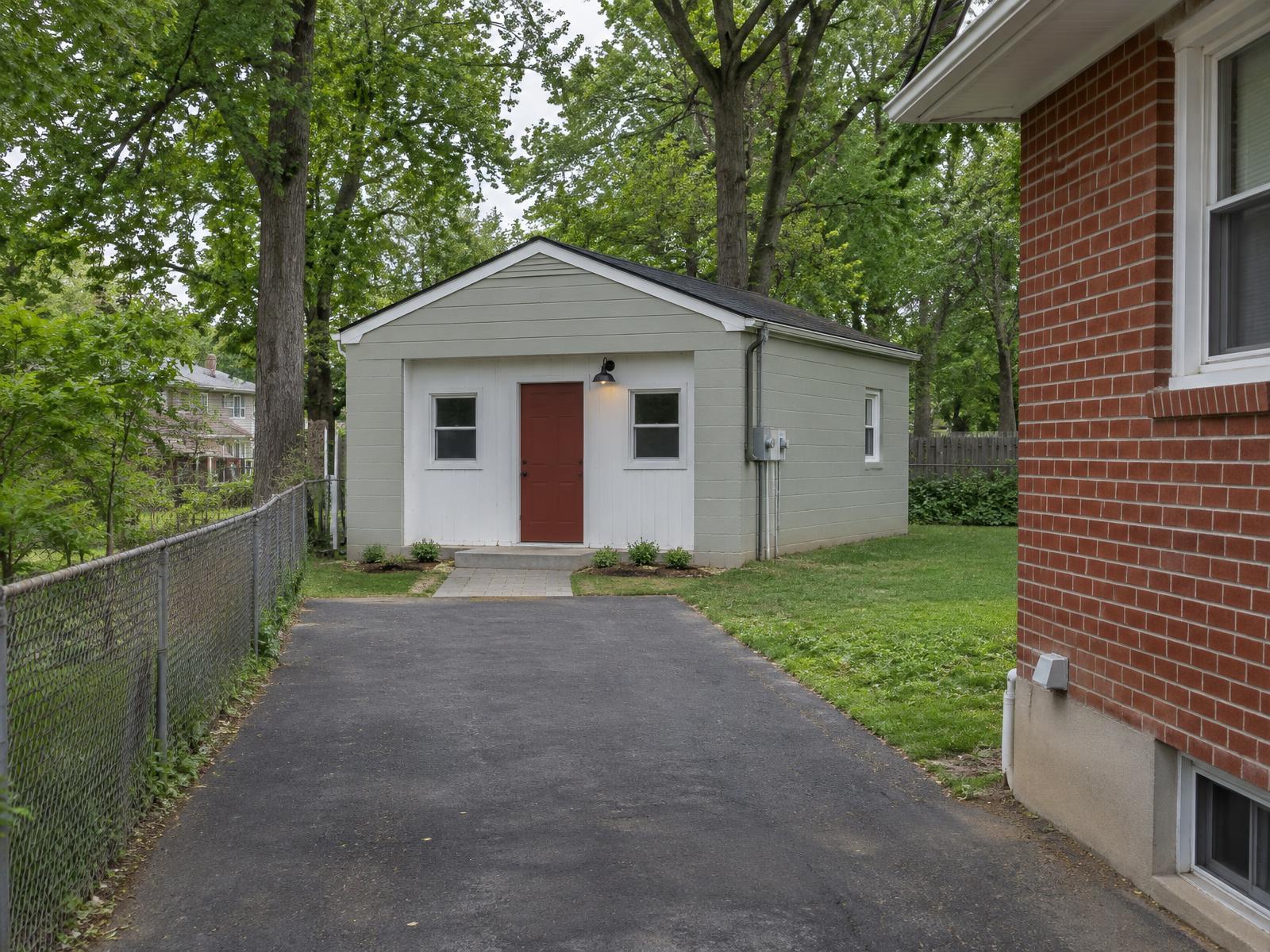
What a new unit costs
Cost vs. Value prices one kind of accessory unit: a new, detached single-story cottage. These are its 2025 Washington, DC figures beside the national ones; a garage or basement conversion has no line in the report.
| Measure | Washington, DC market | U.S. average |
|---|---|---|
| Accessory dwelling unit (new detached build), job cost | $164,6341 | $166,4062 |
| Accessory dwelling unit (new detached build), resale value | $74,7001 | $68,6562 |
Cost vs. Value's ADU job is a new one-story, 660-square-foot detached unit on a slab, with a bedroom suite, a bath with walk-in shower, a kitchen, a mini-split heat pump, a stacked washer and dryer, and a paved parking space.3 Converting a sound garage or lower level skips the foundation and much of the shell, which is where the savings come from.
What tenants pay here
Median gross rent in Prince George's County, which counts the utilities a tenant pays, runs below the Washington metro median.
How many households rent
A slightly larger share of the county's occupied homes are rented than across the metro, so a new unit joins an established local rental market rather than creating one.
Which lots qualify
The county's new law ties accessory units to single-family detached houses, which are close to half the county's housing. Townhouses, a smaller share, are left out.
| Measure | Prince George's County | Washington metro |
|---|---|---|
| Single-family detached homes | 49%6 | 44%6 |
| Townhouses and other attached single-family homes | 17%6 | 20%6 |
Under CB-074-2026, an accessory dwelling unit is permitted by right only where the main use of the lot is a single-family detached house, with one per lot, and it may be a separate structure or an addition to or space within the house.7
Lead rules for older rentals
More than half the county's homes were built before 1980, so many of the houses that could host a unit fall on the older side of the lead-paint cutoff for rentals.
| Measure | Prince George's County | Washington metro |
|---|---|---|
| Homes built before 1980 | 54%8 | 45%8 |
Maryland requires residential rental properties built before 1978 to be registered with the Department of the Environment every year, at $30 per unit, and to get a new lead inspection certificate at each change of occupancy.9 Before a renter signs a lease for most pre-1978 housing, federal law requires the landlord to disclose known lead-based paint and hazards, share available records, hand over EPA's Protect Your Family From Lead pamphlet and include a Lead Warning Statement.10
Permits
The county's new accessory dwelling unit law, enacted in September 2026, opens the path for a unit inside, attached to or behind a single-family detached house. Building one still means DPIE permits for the construction, an electrical permit pulled by a master electrician and WSSC Water permits for the plumbing. Renting it out then takes a county rental license, unless the house sits in one of the cities and towns that license rentals themselves.
- The Prince George's County Council enacted CB-074-2026, the zoning bill that allows and regulates accessory dwelling units, on September 29, 2026, with an effective date of November 16, 2026.11
- Under CB-074-2026, an accessory dwelling unit is permitted by right only where the main use of the lot is a single-family detached house, with one per lot, and it may be a separate structure or an addition to or space within the house.7
- Electrical work for an alteration of an existing home in Prince George's County needs an electrical permit applied for by a master electrician licensed by the State of Maryland.12
- DPIE doesn't review plumbing plans or issue plumbing permits; all plumbing permits in Prince George's County are issued by WSSC Water, which also handles plumbing inspections.13
- Prince George's County issues a single-family house or townhouse rental license for two years, and a landlord renting space that contains two or more separate dwelling units must get a use and occupancy permit from DPIE's Permitting and Licensing Division.14
- A county rental license won't be issued while there are life-safety violations or unpermitted construction, and a property found to have unpermitted construction is referred to DPIE's Inspections Division.14
- Owners in Berwyn Heights, Bowie, Brentwood, Capitol Heights, Cheverly, College Park, District Heights, Edmonston, Forest Heights, Greenbelt, Hyattsville, Landover Hills, Mount Rainier, New Carrollton, Riverdale Park, Seat Pleasant, the Town of Laurel and University Park apply to their municipality for a rental license instead of the county.15
Checked October 11, 2026
Talk to a pro who handles rental conversions in Prince George's County
Calls are recorded. You'll be connected to one independent company that handles rental conversions in your area. We never call or text you. Privacy Policy ·Do Not Sell or Share My Personal Information
What the new law allows
The Prince George's County Council enacted CB-074-2026, the zoning bill that allows and regulates accessory dwelling units, on September 29, 2026, with an effective date of November 16, 2026.11 Maryland's HB 1466, passed in 2025, requires every county and municipality with planning and zoning authority to adopt a local law allowing ADUs on lots with a single-family detached house by October 1, 2026.16 The county's bill is its answer to that state deadline.
The unit's gross floor area may not exceed 75 percent of the main house's, and it may be no taller than 22 feet or the height of the main house.7 No more than four people may live in the accessory dwelling unit, and that limit drops by the number of people renting any part of the main house.7
Either the main house or the accessory dwelling unit must be owner-occupied.7 That rules out buying a house only to rent out both the main home and the unit.
Accessory dwelling units built without a permit before the law takes effect must start coming into compliance by working with DPIE within 90 days of its effective date, and must meet all of its provisions.7 If an apartment already exists in your basement without permits, that window is the time to bring it into line.
Turning existing space into a unit
Maryland's Department of Planning describes ADUs as converted rooms inside an existing house, additions, or new or converted stand-alone accessory structures.16 In the county's split-levels and ramblers, the lower level is an obvious candidate, but a rental unit down there has more to clear than a family room would.
Applicants for a county single-family rental license attest that basements, or parts of them, won't be used as bedrooms or habitable space unless the Code Compliance Division of the Office of Homeland Security authorizes it.14 Ask the company to confirm with the county what a sleeping room in the unit will need before the layout is drawn.
The 2021 IRC requires at least one egress door for each dwelling unit, reached by a continuous path that does not pass through a garage, and opening to a public way or a yard or court that leads to one.17 The 2021 IRC requires smoke alarms in each sleeping room, outside each separate sleeping area and on every story including basements, interconnected within each dwelling unit so that one sounding sets off all of them.17
Maryland requires residential fire sprinkler systems in all new one- and two-family dwellings, which the state's planning department says includes newly built ADUs.18 A new backyard cottage should be priced with that system included from the start.
Becoming a landlord in the county
Prince George's County issues a single-family house or townhouse rental license for two years, and a landlord renting space that contains two or more separate dwelling units must get a use and occupancy permit from DPIE's Permitting and Licensing Division.14 A county rental license won't be issued while there are life-safety violations or unpermitted construction, and a property found to have unpermitted construction is referred to DPIE's Inspections Division.14
Owners in Berwyn Heights, Bowie, Brentwood, Capitol Heights, Cheverly, College Park, District Heights, Edmonston, Forest Heights, Greenbelt, Hyattsville, Landover Hills, Mount Rainier, New Carrollton, Riverdale Park, Seat Pleasant, the Town of Laurel and University Park apply to their municipality for a rental license instead of the county.15
EPA's lead renovation rule generally doesn't cover homeowners working on their own pre-1978 homes, but it does apply if you rent out all or part of your home.19 Maryland requires residential rental properties built before 1978 to be registered with the Department of the Environment every year, at $30 per unit, and to get a new lead inspection certificate at each change of occupancy.9
A short-term rental in Prince George's County must be the host's permanent residence, shown through the Maryland Homestead Tax Credit, and an owner whose homeowners association doesn't allow short-term rentals can't take part.20 Renting by the night is a separate county license with rules of its own. For a county short-term rental license, all construction, including a second stove, must be permitted, and a basement can't be used for bedrooms or habitable space unless DPIE's Enforcement Division authorizes it.20
A unit for a parent
Some families build an accessory unit for an aging parent instead of a tenant. 31%21 of the county's owner-occupied homes already have an older householder, and a one-level unit with a step-free entry, a curbless shower and wide doors keeps working for that purpose for years. NAHB's Certified Aging-in-Place Specialist (CAPS) credential trains remodelers in home modifications for aging in place.22
What happens when you call
When you call the number on this page, a recorded line puts you through to one independent company that handles rental conversions in the Prince George's County area. The design, the schedule and the price are agreed between you and that company.
The company pays us for each call it receives, so connecting costs you nothing, and we never follow up by phone or text. How we make money
After you're connected
Check the company's license with the state before signing. Maryland's Home Improvement Commission licenses home improvement contractors and salespersons, and its License Search shows whether a license is current.23 Check a Maryland license
Then agree in writing who will pull the building permit, and line it up with the date the county's new law takes effect.
Questions people ask
Can I rent out a basement apartment in Prince George's County?
Once the county's new law takes effect, yes, if the house is a single-family detached home and you live in either the house or the unit. The Prince George's County Council enacted CB-074-2026, the zoning bill that allows and regulates accessory dwelling units, on September 29, 2026, with an effective date of November 16, 2026.11 You'll also need a rental license. Prince George's County issues a single-family house or townhouse rental license for two years, and a landlord renting space that contains two or more separate dwelling units must get a use and occupancy permit from DPIE's Permitting and Licensing Division.14
Can a townhouse have an accessory dwelling unit?
No. Under CB-074-2026, an accessory dwelling unit is permitted by right only where the main use of the lot is a single-family detached house, with one per lot, and it may be a separate structure or an addition to or space within the house.7
How big can the unit be?
The unit's gross floor area may not exceed 75 percent of the main house's, and it may be no taller than 22 feet or the height of the main house.7 The occupancy cap applies too. No more than four people may live in the accessory dwelling unit, and that limit drops by the number of people renting any part of the main house.7
Can I list the unit as a short-term rental?
Short-term rentals need their own county license. A short-term rental in Prince George's County must be the host's permanent residence, shown through the Maryland Homestead Tax Credit, and an owner whose homeowners association doesn't allow short-term rentals can't take part.20
Sources
Page updated October 11, 2026. How we source our numbers
- Zonda / Journal of Light Construction, Cost vs. Value 2025, Washington, DC. Released 2025. Washington, DC. Industry source.
- Zonda / Journal of Light Construction, Cost vs. Value 2025, national. Released 2025. United States. Industry source.
- Zonda / Journal of Light Construction, Cost vs. Value project description: Accessory Dwelling Unit. Released September 23, 2025. View source. Industry source.
- U.S. Census Bureau, American Community Survey 2020–2024 5-year, table B25064. Released January 29, 2026. Prince George's County, MD, Washington-Arlington-Alexandria metro.
- U.S. Census Bureau, American Community Survey 2020–2024 5-year, table B25003. Released January 29, 2026. Prince George's County, MD, Washington-Arlington-Alexandria metro.
- U.S. Census Bureau, American Community Survey 2020-2024 5-year, Table B25024 (Units in Structure). Released January 29, 2026. Prince George's County, MD.
- Prince George's County Council, sitting as the District Council, CB-074-2026 (DR-2), Accessory Dwelling Units, adopted bill text. Released September 29, 2026. View source.
- U.S. Census Bureau, American Community Survey 2020–2024 5-year, table B25034. Released January 29, 2026. Prince George's County, MD, Washington-Arlington-Alexandria metro.
- Maryland Department of the Environment, Lead Registration. No publication date. View source.
- U.S. Environmental Protection Agency, Real Estate Disclosures about Potential Lead Hazards. Released May 27, 2026. View source.
- Prince George's County Council, Agenda Item Summary, CB-074-2026. Released September 29, 2026. View source.
- Prince George's County Department of Permitting, Inspections and Enforcement, Residential Building Permits: Alteration. No publication date. View source.
- Prince George's County Department of Permitting, Inspections and Enforcement, Residential Building Permits: Plumbing. No publication date. View source.
- Prince George's County Department of Permitting, Inspections and Enforcement, Single-Family Rental Licensing. No publication date. View source.
- Prince George's County Department of Permitting, Inspections and Enforcement, Rental Housing Licenses. No publication date. View source.
- Maryland Department of Planning, Accessory Dwelling Units. No publication date. View source.
- International Code Council, 2021 International Residential Code, Chapter 3 Building Planning. Released 2021. View source. Industry source.
- Maryland Department of Planning, ADU Bill (HB 1466) FAQ for Local Governments. No publication date. View source.
- U.S. Environmental Protection Agency, Lead Renovation, Repair and Painting Program. Released June 17, 2026. View source.
- Prince George's County Department of Permitting, Inspections and Enforcement, Short-Term Rental Licensing. No publication date. View source.
- U.S. Census Bureau, American Community Survey 2020–2024 5-year, table B25007. Released January 29, 2026. Prince George's County, MD.
- National Association of Home Builders, Certified Aging-in-Place Specialist (CAPS). No publication date. View source. Industry source.
- Maryland Department of Labor, Maryland Home Improvement Commission. No publication date. View source.