Mid-century modern bathrooms
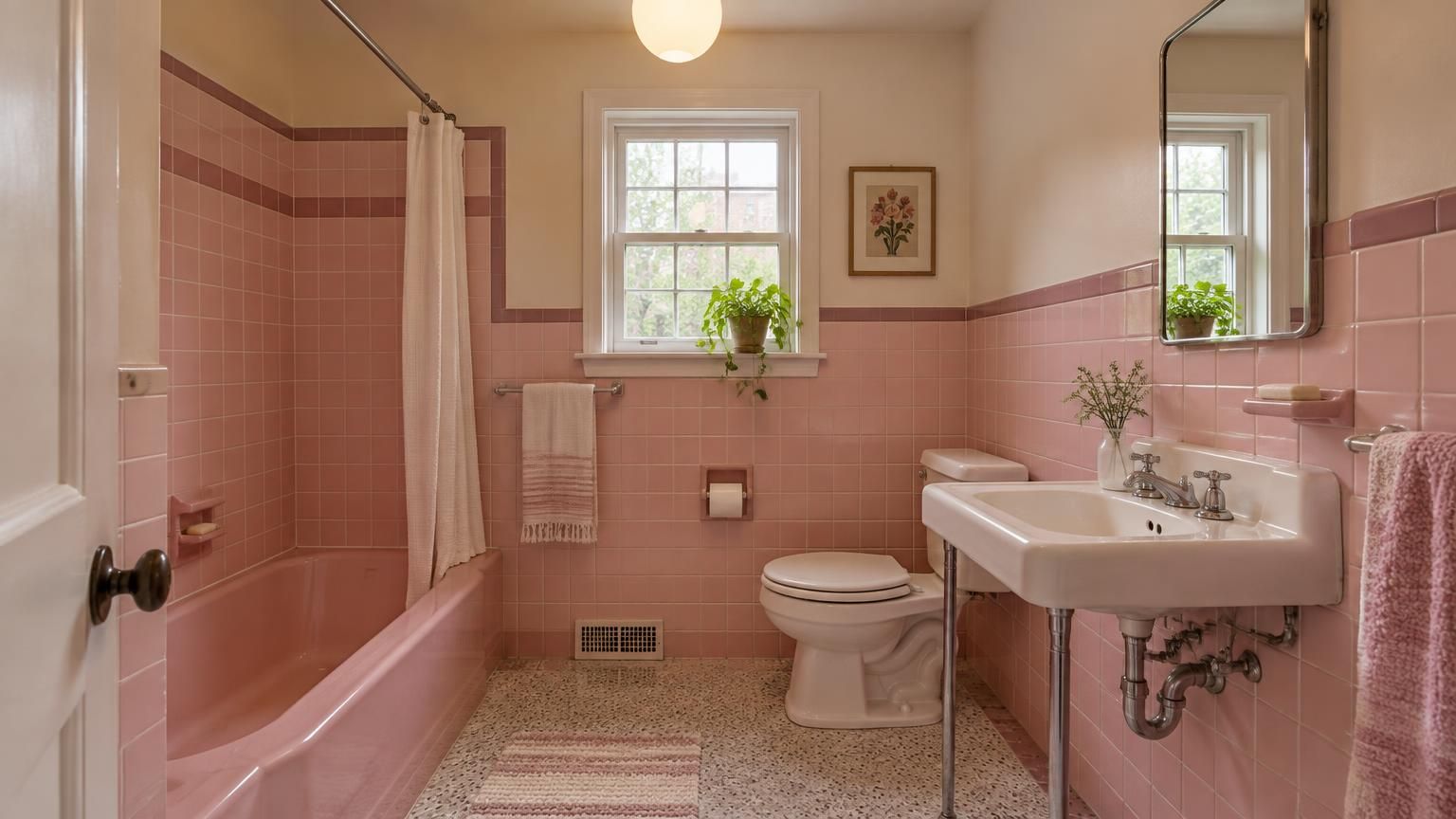
Postwar bathrooms are known for colored tile and fixtures, small square wall tile and sinks on legs or hung on the wall. In the Baltimore metro, 22%1 of homes were built between 1950 and 1969, so plenty of these rooms are still out there.
Updated October 11, 2026
What defines the look
- Colored tile and fixtures
- Postwar bathrooms often paired pastel ceramic tile with tubs, sinks and toilets in matching colored enamel; pink is the color most tied to the 1950s.2
- Four-inch square wall tile
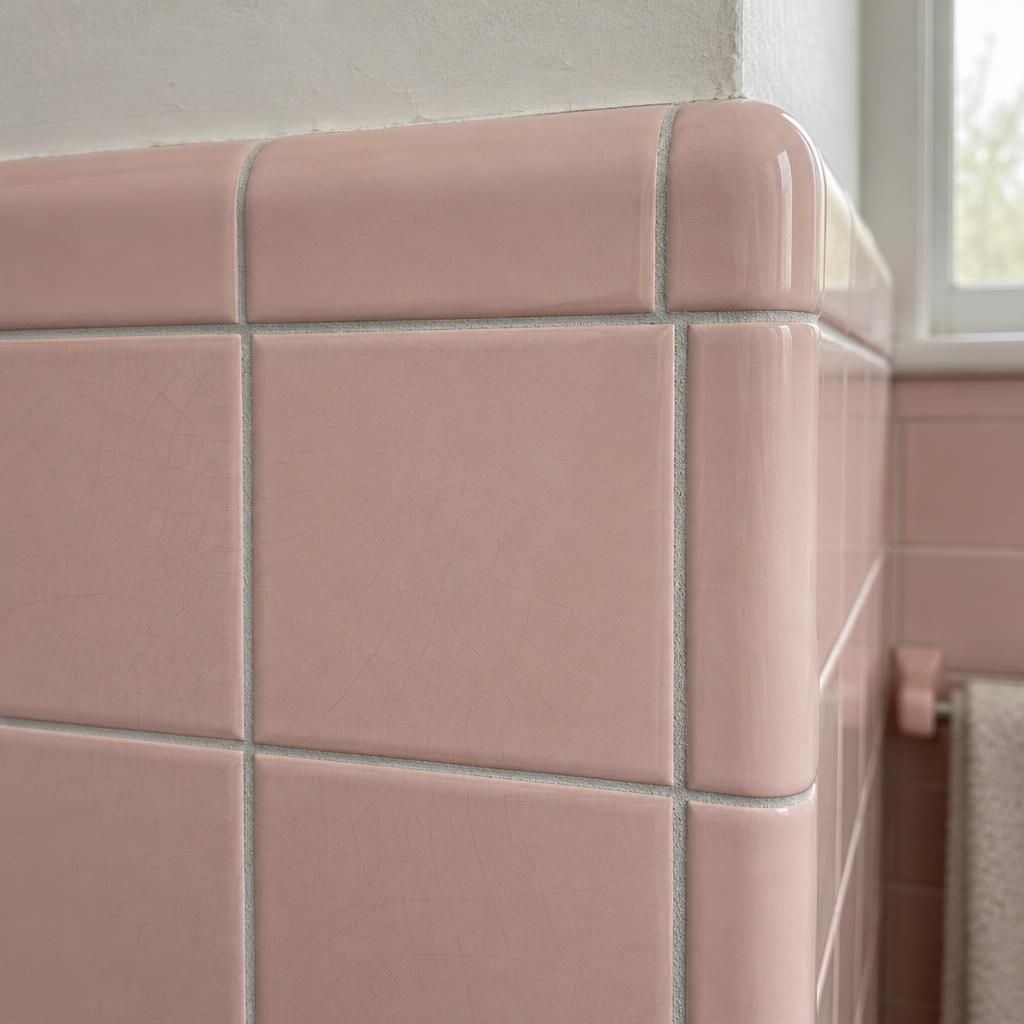
- Walls were commonly finished in roughly four-inch square glazed tile with bullnose trim, made in several slightly different sizes, so measure an original wall before buying matches.3
- Sinks on legs or on the wall
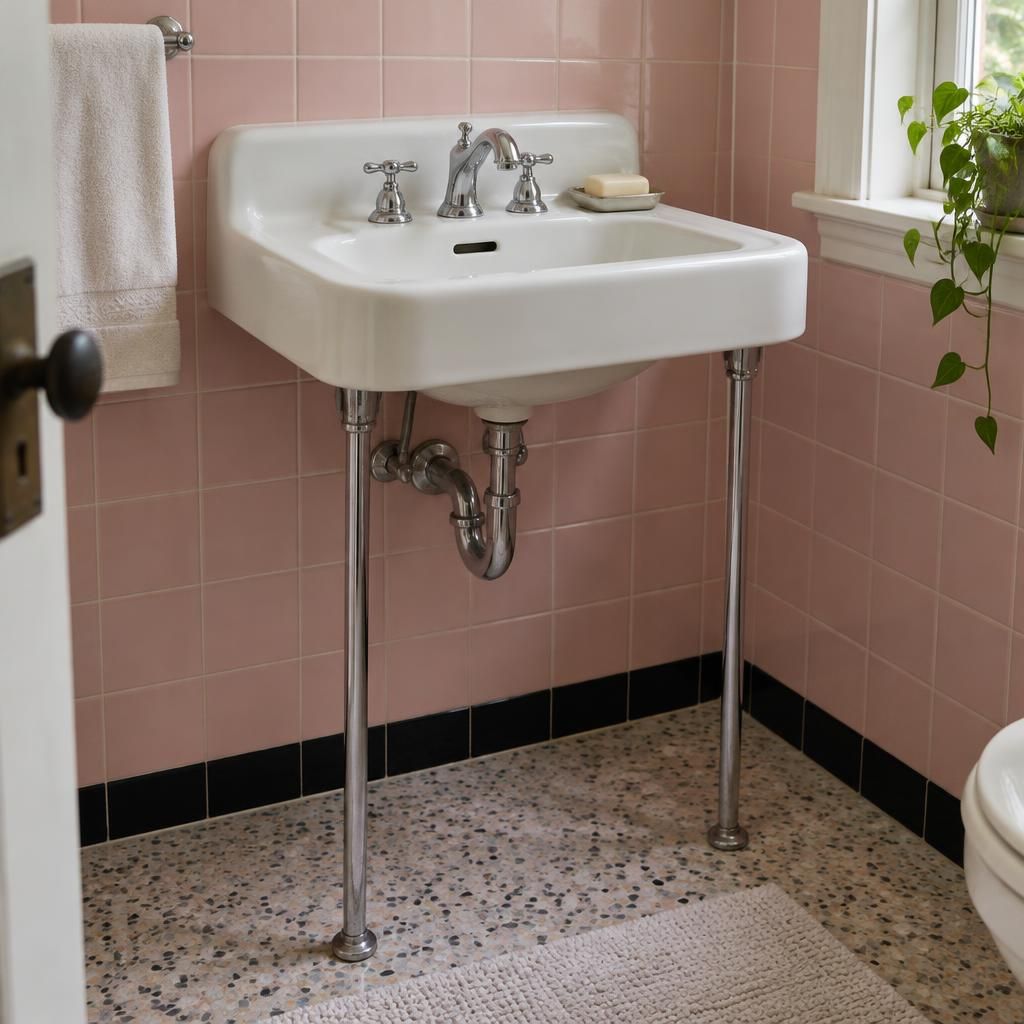
- A 1954 Kohler catalog offered bathroom sinks on pedestals, on chrome legs, set into vanities, or hung straight on the wall.4
- Small, efficient rooms with built-ins
- 1950s ranch houses leaned on built-ins to make modest plans work, and most had a single full bath designed to be small and efficient.5
- Laminate, vinyl and linoleum
- Decorative plastic laminate, vinyl and linoleum came in bright colors and busy patterns and covered many counters and floors of the period.5
- Terrazzo and other period floors
- Terrazzo, cork, linoleum, slate and ceramic tile are all period-authentic floors for a mid-century house.6
- Wood that shows its grain
- Mid-century design favored wood stained to show its grain over painted wood; natural wood cabinets are a hallmark of period kitchens.6
- Sculptural lighting
- George Nelson's Bubble Lamp, a steel frame skinned in plastic from 1952, is a museum-held example of the period's sculptural lighting.7
Before you open the walls
Original colored tile and enameled fixtures are getting scarce; preservationists advise keeping them where possible and recoating chipped fixtures in place.2 To keep an original tiled tub or shower wall, choose new fixtures that connect to the existing plumbing so the wall doesn't have to be opened.8
Many postwar interior materials can't be made anymore and some may be hazardous, so test what they're made of before deciding to keep or remove them.5 The EPA lists vinyl floor tile, vinyl sheet backing and flooring adhesives among products that may contain asbestos, which is released mainly when the material is disturbed.9 The EPA advises having an accredited asbestos professional inspect before a remodel that could disturb suspect materials, and not sanding or power-stripping suspect flooring yourself.10
The EPA notes that lead can collect inside galvanized pipe and later reach drinking water, and that solder made before 1986 contained high levels of lead.11
Where these bathrooms are
We publish style guides where Census data shows the houses exist. In the Baltimore metro, 22%1 of homes were built from 1950 to 1969. Bathroom remodeling in Baltimore
Talk to a pro about your mid-century bathroom
Calls are recorded. You'll be connected to one independent company that handles bathroom remodels in your area. We never call or text you. Privacy Policy ·Do Not Sell or Share My Personal Information
Sources
Page updated October 11, 2026. How we source our numbers
- U.S. Census Bureau, American Community Survey 2020–2024 5-year, table B25034. Released January 29, 2026. Baltimore-Columbia-Towson metro.
- Preservation Idaho, Idaho Modern Field Guide. No publication date. View source. Industry source.
- Retro Renovation, Tile in retro colors for your mid century bathroom. Released January 22, 2019. View source. Industry source.
- Retro Renovation, Vintage bathroom sinks: the seven distinct design styles. Released March 13, 2013. View source. Industry source.
- National Park Service, NCPTT, Identifying the 1950s Ranch House Interior as a Cultural Resource. No publication date. View source.
- a2modern, Characteristics of Mid-century Modern. No publication date. View source. Industry source.
- Brooklyn Museum, George Nelson, Bubble Lamp, 1952. No publication date. View source. Industry source.
- Atomic Ranch, Flipping Diaries: Preserve Vintage Tile with Style. No publication date. View source. Industry source.
- U.S. Environmental Protection Agency, Learn About Asbestos. Released July 13, 2026. View source.
- U.S. Environmental Protection Agency, Protect Your Family from Exposures to Asbestos. Released June 25, 2026. View source.
- U.S. Environmental Protection Agency, Sources of Lead in Drinking Water. Released August 2017. View source.