Rental conversions in Northern Virginia
Fairfax County calls a basement apartment or in-law suite an accessory living unit, and under its current rules the unit has to sit inside a single-family detached house, stay under a size cap and have the owner living on the property; the county has approved 2301 by administrative permit since 2021. Cost vs. Value prices only a new detached unit, at $164,6342 in its 2025 Washington, DC market, so a conversion's price turns on what your space still lacks: a side or rear entrance, a kitchen, an escape window, or parking.
Calls are recorded. One independent company that handles rental conversions in the Northern Virginia area answers.
Updated October 11, 2026
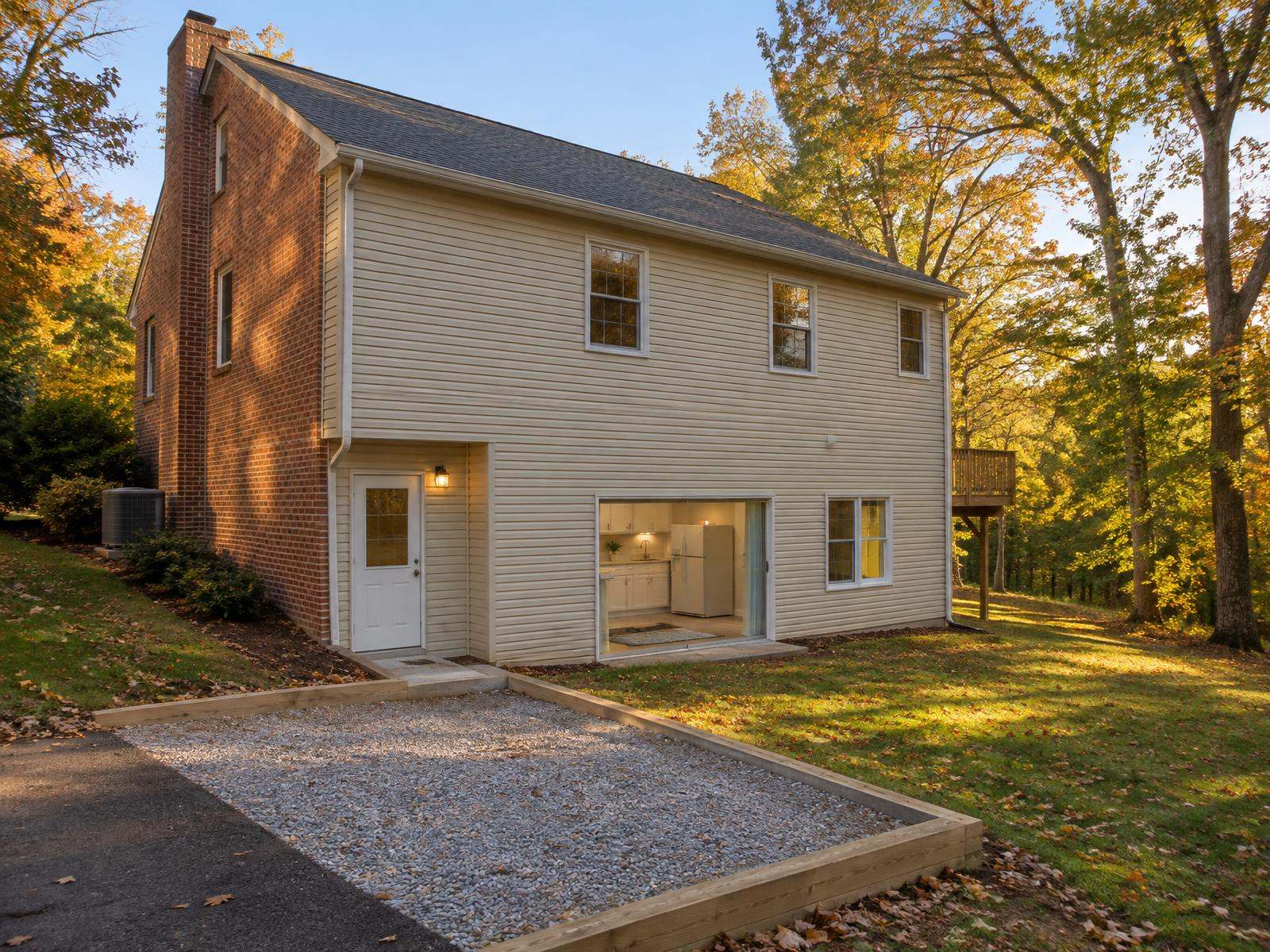
How many accessory units Fairfax has approved
County staff counted the accessory living units approved since the zoning rewrite of 2021. The Census count of detached houses shows how many homes the current rules could apply to.
| Measure | Fairfax County |
|---|---|
| Accessory living units approved by administrative permit since 2021 | 2301 |
| Accessory living units approved by special permit since 2021 | 281 |
| Single-family detached homes | 195,8843 |
Approvals are few next to the number of eligible houses. If a house you own or are buying already has a lower-level apartment, ask the county whether it was ever approved before you rent it out.
The current size and occupancy caps
These limits apply to an interior unit approved by administrative permit under the zoning ordinance in force in October 2026. A special permit from the Board of Zoning Appeals can change some of them.
| Measure | Fairfax County |
|---|---|
| Largest interior accessory living unit allowed, square feet | 8004 |
| Largest interior accessory living unit allowed, share of the main house | 40%4 |
| Most people allowed to live in an accessory living unit | 24 |
| Accessory living unit permit application fee | $2854 |
Under Fairfax County's current standards, an interior accessory living unit may be no larger than 800 square feet or 40 percent of the main house, whichever is less, or the whole basement as it stood on July 1, 2021; it may have no more than two bedrooms and no more than two occupants.4 The county has proposed raising the cap and the occupant limit; the section on the amendment below has the details.
The one accessory-unit price in the Washington market
Cost vs. Value's accessory dwelling unit is a newly built detached cottage, not a conversion. Under Fairfax County's current rules, a detached accessory living unit needs a special permit and a lot of at least two acres, and may not exceed 1,200 square feet.4 Treat this price as a point of comparison.
| Measure | Washington, DC market | U.S. average |
|---|---|---|
| Accessory dwelling unit (new detached build), job cost | $164,6342 | $166,4065 |
| Accessory dwelling unit (new detached build), resale value | $74,7002 | $68,6565 |
| Accessory dwelling unit (new detached build), cost recouped at resale | 45%2 | – |
A basement conversion reuses the foundation, roof and outside walls a new cottage has to pay for. Price it from what the lower level is missing instead: a second entrance on the side or rear, a kitchen, a bedroom escape opening, alarms tied to the main house and the extra parking space.
Renters and rents in Fairfax County
Census figures show what share of Fairfax County homes are rented and what the typical renter pays, compared with the whole Washington metro.
| Measure | Fairfax County | Washington metro |
|---|---|---|
| Homes occupied by renters | 31%6 | 36%6 |
| Median gross rent, per month | $2,2767 | $2,0277 |
Fairfax has fewer renters than the metro overall but higher rents. That median covers whole apartments and houses, not a unit capped at two occupants, so ask a local property manager what a space like yours would bring before you size the budget around rent.
Short-term rentals need their own permit
Fairfax County regulates Airbnb-style stays as short-term lodging, with a separate permit and yearly limits, and keeps them apart from accessory living units.
| Measure | Fairfax County |
|---|---|
| Most nights a home may be rented short-term each year | 60 days8 |
| Most adult lodgers allowed per night | 68 |
| Short-term lodging permit application fee | $2858 |
Fairfax County prohibits short-term lodging in an accessory living unit, a detached accessory structure, a temporary family health care structure, and affordable or workforce dwelling units.8 A converted lower level can be one or the other: a long-term unit under the accessory living unit rules, or guest space for short stays in a home the operator lives in.
Which houses can add a unit
Today Fairfax County allows an accessory living unit only with a single-family detached house. These Census shares show how much of the county's housing that takes in, next to the Washington metro.
| Measure | Fairfax County | Washington metro |
|---|---|---|
| Single-family detached homes | 46%3 | 44%9 |
| Townhouses and other attached single-family homes | 23%3 | 20%9 |
Townhouse owners are shut out under the current rules. Fairfax County's 2026 proposal includes an option to allow an interior accessory living unit in a townhouse or duplex, but only with a special permit from the Board of Zoning Appeals.10
Permits
These rules are Fairfax County's; Arlington, Loudoun, Prince William, Alexandria and Falls Church set their own. A basement or in-law apartment in Fairfax needs two kinds of approval: a zoning permit for the accessory living unit, and building permits for the construction. The zoning permit waits until the building work passes its final inspection, and the owner records it in the land records before anyone moves in. Short-term rentals take a different zoning permit altogether.
- In Fairfax County, an accessory living unit inside a single-family detached house that meets all the standards, including entrances, size and parking, can be approved by administrative permit; otherwise it needs a special permit from the Board of Zoning Appeals.4
- Fairfax County accessory living unit applications are filed online in PLUS, take about 30 calendar days to process, and cost $285, or $75 to renew.4
- If a building permit is needed to create a Fairfax County accessory living unit, the zoning permit is held until that building permit passes final inspection, and the review may call for permits for a stove, a bedroom escape opening or earlier unpermitted electrical work.4
- Before anyone moves into a Fairfax County accessory living unit, the owner must record the permit in the county land records; the permit runs for two years at first and can be extended for up to five years at a time.4
- Fairfax County lists finished basements, creating a bedroom, and installing new window or door openings among the interior alterations that need a permit.11
- In Fairfax County, renting any part of a home for stays of less than 30 days requires a short-term lodging permit before the first guest, and the operator must be a permanent resident of the property; the permit lasts two years.8
Checked October 11, 2026
Talk to a pro who handles rental conversions in Northern Virginia
Calls are recorded. You'll be connected to one independent company that handles rental conversions in your area. We never call or text you. Privacy Policy ·Do Not Sell or Share My Personal Information
Virginia's new ADU law and Fairfax County
A Virginia law enacted in 2026 and taking effect July 1, 2027 makes ADUs a permitted accessory use in single-family zoning districts, though it does not apply to localities that adopted an ADU ordinance before January 1, 2026.12 Fairfax County staff say Virginia's 2026 accessory dwelling unit law, which takes effect July 1, 2027, does not apply to Fairfax County, because it exempts localities that adopted an ordinance before January 1, 2026.1 For a house in Fairfax County, the county's own zoning ordinance is the one to read, and the state law's limits on parking and owner-occupancy rules don't reach it.
Fairfax County has proposed changes to its accessory living unit rules, with public hearings before the Planning Commission on October 29, 2026 and the Board of Supervisors on November 17, 2026.13 As proposed in 2026, Fairfax County's amendment would raise the size cap for an accessory living unit to 1,200 square feet or 40 percent of the main house, whichever is less, allow three occupants instead of two, drop the owner-occupancy rule and the extra parking space, and allow a detached unit by right on lots of at least 36,000 square feet.10
Until the Board of Supervisors votes, design to the current limits, or ask the company for a layout that would work under either set of rules.
Turning a Fairfax lower level into a unit
Fairfax County requires any new outside entrance for an accessory living unit to be on the side or rear of the house, and the unit must connect to the main house through finished, heated and cooled, fully enclosed interior space.4 On a sloping lot with a walkout basement, the existing rear door can often serve as the unit's entrance; in a fully buried basement, a new areaway and door at the side or back is a bigger structural job.
Fairfax County currently requires either the accessory living unit or the main house to be owner-occupied, and the lot to have the parking required for the house plus one more space.4 The county checks those spaces on the plat filed with the application, so mark them before you apply and keep them clear afterward.
The 2021 IRC requires the units of a two-family dwelling to be separated by walls and floors with at least a 1-hour fire-resistance rating, or a 1/2-hour rating if the building has an automatic sprinkler system throughout.14 Ask the building department early whether your unit will be reviewed as part of a single-family house or as a second dwelling, since the fire separation it needs follows from that answer.
Alarms, exits and the occupancy limit
A Fairfax County accessory living unit must have a working multi-purpose fire extinguisher, and smoke detectors, plus carbon monoxide detectors where a fireplace or gas service requires them, interconnected with the main house.4 In Fairfax County, an emergency escape and rescue opening is required in the basement of a house built after October 1, 2003 and in every basement bedroom whatever the house's age; older basements may be finished without one, though the county strongly recommends it.15
Under Fairfax County's current standards, an interior accessory living unit may be no larger than 800 square feet or 40 percent of the main house, whichever is less, or the whole basement as it stood on July 1, 2021; it may have no more than two bedrooms and no more than two occupants.4 The occupant cap counts people rather than leases, so under the current rules a couple with a child would already be over it.
Lead rules once part of the house is rented
EPA's lead renovation rule generally doesn't cover homeowners working on their own pre-1978 homes, but it does apply if you rent out all or part of your home.16 With 44%17 of Fairfax County homes built before 1980, a lot of lower levels with original paneling and painted trim come under that rule once a tenant moves in.
Before a renter signs a lease for most pre-1978 housing, federal law requires the landlord to disclose known lead-based paint and hazards, share available records, hand over EPA's Protect Your Family From Lead pamphlet and include a Lead Warning Statement.18
If the apartment is already there
Fairfax County's Department of Code Compliance treats work done without the proper permits or inspections, including a finished basement or attic, as unpermitted construction; a notice of violation allows a set period to get the permits and inspections, and work permitted after the fact must pass all of them.19 Bringing an existing lower-level apartment into line may mean opening some walls so an inspector can see the wiring and plumbing, so price that possibility before you count on the rent.
A unit for a parent instead of a tenant
More than one in four adults 65 and older fall each year.20 If the unit is for an aging parent, put the bedroom, a curbless shower and the entrance on one level, and keep the doorways wide enough for a walker. On a walkout lot that can mean no stairs at all between the car and the bed. NAHB's Certified Aging-in-Place Specialist (CAPS) credential trains remodelers in home modifications for aging in place.21
What happens when you call
Calling the number on this page connects you, on a recorded line, to one independent company that handles rental conversions in the Northern Virginia area. You work out the layout, the schedule and the price with that company directly.
The company pays us for the call; you pay us nothing, and we never call or text you. How we make money
After you're connected
Look the company up in Virginia's license records before you sign. Virginia's Department of Professional and Occupational Regulation advises hiring only licensed contractors, and its License Lookup shows a license's status and any past disciplinary actions.22 Virginia's Board for Contractors licenses contracting businesses as Class A, B or C; the class sets the dollar value of jobs a firm may take on, and its classification or specialty sets the type of work it may do.23 Check a Virginia license
Decide who will file the building permits. Owners may get Fairfax County permits in their own name, but the county strongly recommends that a properly licensed contractor pull them as the responsible party.24
Questions people ask
Can I rent out my basement in Fairfax County?
For long-term tenants, yes, if it qualifies as an accessory living unit. In Fairfax County, an accessory living unit inside a single-family detached house that meets all the standards, including entrances, size and parking, can be approved by administrative permit; otherwise it needs a special permit from the Board of Zoning Appeals.4 Fairfax County currently requires either the accessory living unit or the main house to be owner-occupied, and the lot to have the parking required for the house plus one more space.4
Does Virginia's new ADU law change the Fairfax rules?
Fairfax County staff say Virginia's 2026 accessory dwelling unit law, which takes effect July 1, 2027, does not apply to Fairfax County, because it exempts localities that adopted an ordinance before January 1, 2026.1 Any change in Fairfax comes through the county's own amendment instead. Fairfax County has proposed changes to its accessory living unit rules, with public hearings before the Planning Commission on October 29, 2026 and the Board of Supervisors on November 17, 2026.13
Can I list my accessory unit on Airbnb?
No. Fairfax County prohibits short-term lodging in an accessory living unit, a detached accessory structure, a temporary family health care structure, and affordable or workforce dwelling units.8 Fairfax County limits short-term lodging to 60 nights per calendar year, no more than six adult lodgers a night, and one rental contract a night, and bans events.8
Sources
Page updated October 11, 2026. How we source our numbers
- Fairfax County Department of Planning and Development, Staff Report: Zoning Ordinance Amendment, Accessory Living Units. Released September 29, 2026. Fairfax County, VA.
- Zonda / Journal of Light Construction, Cost vs. Value 2025, Washington, DC. Released 2025. Washington, DC. Industry source.
- U.S. Census Bureau, American Community Survey 2020–2024 5-year, table B25024. Released January 29, 2026. Fairfax County, VA.
- Fairfax County Department of Planning and Development, Accessory Living Unit (Administrative Permit). Released June 30, 2026. Fairfax County, VA.
- Zonda / Journal of Light Construction, Cost vs. Value 2025, national. Released 2025. United States. Industry source.
- U.S. Census Bureau, American Community Survey 2020–2024 5-year, table B25003. Released January 29, 2026. Fairfax County, VA, Washington-Arlington-Alexandria metro.
- U.S. Census Bureau, American Community Survey 2020–2024 5-year, table B25064. Released January 29, 2026. Fairfax County, VA, Washington-Arlington-Alexandria metro.
- Fairfax County Department of Planning and Development, Short-Term Lodging in Fairfax County. Released July 1, 2026. Fairfax County, VA.
- U.S. Census Bureau, American Community Survey 2020-2024 5-year, Table B25024 (Units in Structure). Released January 29, 2026. Washington-Arlington-Alexandria metro.
- Fairfax County Department of Planning and Development, Accessory Living Unit FAQs. Released October 2, 2026. View source.
- Fairfax County Land Development Services, Does My Project Require a Permit?. No publication date. View source.
- Virginia General Assembly (Virginia Law Library), Code of Virginia § 15.2-2292.4, Development and use of accessory dwelling units. Released 2026. View source.
- Fairfax County Department of Planning and Development, Accessory Living Units – Proposed Zoning Ordinance Amendment. Released October 7, 2026. View source.
- International Code Council, 2021 International Residential Code, Chapter 3 Building Planning. Released 2021. View source. Industry source.
- Fairfax County Land Development Services, Typical Finished Basement Details (based on the 2021 Virginia Residential Code). No publication date. View source.
- U.S. Environmental Protection Agency, Lead Renovation, Repair and Painting Program. Released June 17, 2026. View source.
- U.S. Census Bureau, American Community Survey 2020–2024 5-year, table B25034. Released January 29, 2026. Fairfax County, VA.
- U.S. Environmental Protection Agency, Real Estate Disclosures about Potential Lead Hazards. Released May 27, 2026. View source.
- Fairfax County Department of Code Compliance, Code Compliance in Unpermitted Construction. Released September 3, 2024. View source.
- Centers for Disease Control and Prevention, Facts About Older Adult Falls. Released September 4, 2026. View source.
- National Association of Home Builders, Certified Aging-in-Place Specialist (CAPS). No publication date. View source. Industry source.
- Virginia Department of Professional and Occupational Regulation, DPOR Consumer Guide: Hiring a Contractor. No publication date. View source.
- Virginia Department of Professional and Occupational Regulation, Board for Contractors. No publication date. View source.
- Fairfax County Land Development Services, Permit Library: Addition/Alteration (ALTR), Residential. No publication date. View source.