Rental conversions in Richmond
We found no source that prices a basement or attic conversion for Richmond, and Cost vs. Value's only accessory unit is a new detached cottage at $166,4061 nationally in 2025. What sets Richmond apart is that the city already allows one accessory unit in every residential zoning district, so the questions are mostly size, fire safety and utilities rather than whether a unit is allowed at all.
Calls are recorded. One independent company that handles rental conversions in the Richmond area answers.
Updated October 11, 2026
How much of Richmond rents
Census tenure counts describe a city where most households rent and a metro where most own.
| Measure | Richmond city | Metro |
|---|---|---|
| Homes occupied by renters | 56%2 | 33%2 |
| Renter-occupied housing units | 58,9142 | 176,0822 |
With renters a majority of city households, a well-built unit joins a deep rental market, and the city has begun building tools to check rental conditions. In November 2025, Richmond City Council approved an ordinance creating a Residential Rental Inspection Program; the ordinance designates no rental inspection districts itself, and each district needs a separate Council action after review of factors such as building code or health violations, public safety responses or tenant petitions.3
What a unit rents for
Median gross rent, which adds tenant-paid utilities to the rent itself, is a rough guide to what a new unit could bring in.
The houses that would host a unit
Census counts describe the city houses where a new unit would go: old, and in a fair share of cases joined to the house next door.
| Measure | Richmond city | Metro |
|---|---|---|
| Homes built before 1940 | 28%5 | 9%5 |
| Homes built before 1980 | 71%5 | 44%5 |
| Single-family attached homes (rowhouses and townhouses) | 8%6 | – |
EPA's lead renovation rule generally doesn't cover homeowners working on their own pre-1978 homes, but it does apply if you rent out all or part of your home.7 With this much prewar housing in the city, plan the conversion as lead-safe work from the first day.
The house behind the investment
The main house carries the cost of a conversion, so its value frames how much a unit can sensibly cost.
Permits
Richmond handles an accessory unit through both zoning and the building code. The zoning side is settled: one unit per lot with a single-family house, capped in size and held to the district's setbacks and height. The building side depends on the layout: an attached unit turns the house into a two-family dwelling, a missing fire separation means an alarm system throughout, and every trade gets its own permit. No one moves in until the certificate of occupancy is issued. Henrico and Chesterfield counties set their own rules outside the city.
- Richmond City Council adopted an ordinance on September 25, 2023 that permits one accessory dwelling unit in all residential zoning districts, on the same lot as an existing or proposed single-family dwelling.9
- A Richmond ADU can't exceed one-third of the floor area of the main single-family dwelling or 500 square feet, whichever is greater, and must meet the zoning district's setback, lot coverage and height rules.9
- In Richmond, an attached ADU, such as one in the basement of the main house, changes the house's use to a detached two-family dwelling, and its final certificate of occupancy is issued on that basis.10
- If an ADU in Richmond is built without fire separation from the main dwelling, a fire alarm system complying with Chapter 29 of NFPA 72 and interconnected carbon monoxide alarms must be installed throughout.10
- Utilities for an attached ADU in Richmond must come through the primary dwelling unless the Commissioner of Buildings approves otherwise, while a detached ADU may have its own connections; every piece of trade work for an ADU needs its own trade permit and inspections.10
- Richmond requires a certificate of occupancy before a building or structure is occupied or its occupancy changes.11
- In Richmond, electrical, mechanical, plumbing and gas piping work can't be included on a residential building permit; each trade needs its own permit application.12
Checked October 11, 2026
Talk to a pro who handles rental conversions in Richmond
Calls are recorded. You'll be connected to one independent company that handles rental conversions in your area. We never call or text you. Privacy Policy ·Do Not Sell or Share My Personal Information
Richmond's accessory unit rules
Richmond City Council adopted an ordinance on September 25, 2023 that permits one accessory dwelling unit in all residential zoning districts, on the same lot as an existing or proposed single-family dwelling.9 A Virginia law enacted in 2026 and taking effect July 1, 2027 makes ADUs a permitted accessory use in single-family zoning districts, though it does not apply to localities that adopted an ADU ordinance before January 1, 2026.13 Richmond adopted its ordinance in 2023, ahead of that cutoff, so the city's own rules are the ones to plan around.
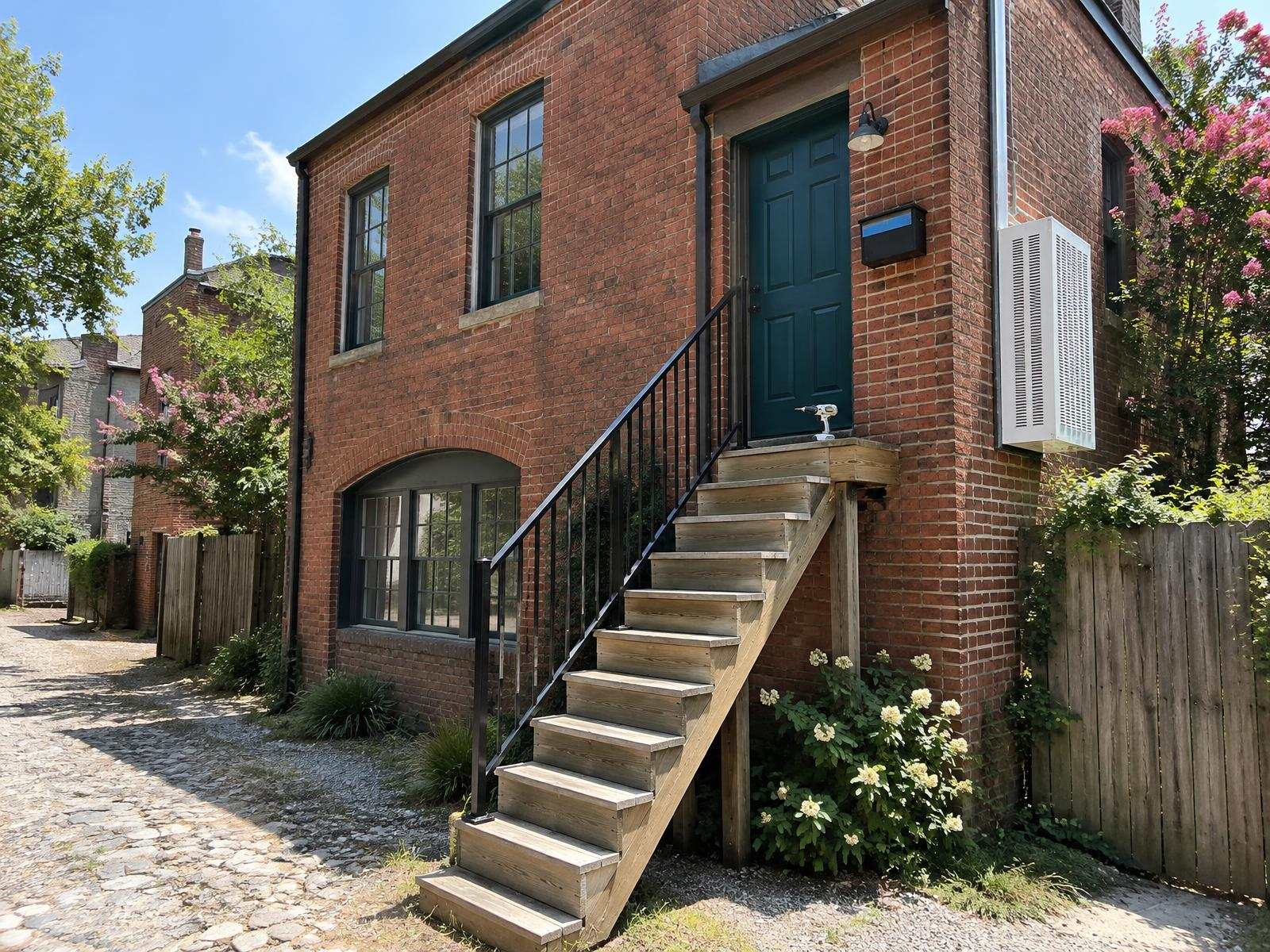
Richmond ADUs must meet the Virginia Residential Code's design criteria for lighting, ventilation, heating, room areas, ceiling heights, sanitation and emergency escape openings, with an exception for historic buildings approved by the Commissioner of Buildings.10 A detached ADU in Richmond needs fire department access from the main street or the rear alley and gets a new address of its own.10 An alley-facing carriage house or garage can suit a detached unit, as long as fire crews can reach it.
The City of Richmond has released Draft Three of Code Refresh, its rewrite of the city's decades-old zoning code.14 Zoning details can shift while a rewrite is under way, so confirm the current rules with the zoning office before paying for drawings.
Richmond allows a short-term rental in a dwelling unit or a permitted ADU only if the operator owns the property, and in a residential zoning district the rental must be on the lot of the operator's primary residence; the permit is renewed every two years.15 A unit meant for nightly guests has to pass that owner and residence test on top of the accessory unit rules.
Fire separation and alarms in a shared house
In Richmond, an attached ADU, such as one in the basement of the main house, changes the house's use to a detached two-family dwelling, and its final certificate of occupancy is issued on that basis.10 The 2021 IRC requires the units of a two-family dwelling to be separated by walls and floors with at least a 1-hour fire-resistance rating, or a 1/2-hour rating if the building has an automatic sprinkler system throughout.16 In a basement unit that separation is the ceiling overhead; in an upstairs unit it is the floor underfoot.
If an ADU in Richmond is built without fire separation from the main dwelling, a fire alarm system complying with Chapter 29 of NFPA 72 and interconnected carbon monoxide alarms must be installed throughout.10 The U.S. Fire Administration says homeowners and landlords should put smoke alarms in every bedroom, outside each sleeping area and on every level, test them monthly, and replace them 10 years from their manufacture date.17 Decide early whether to build the separation or install the alarm system, since the choice changes the drywall, the ceiling and the electrical plan.
Being a landlord in an older Richmond house
In November 2025, Richmond City Council approved an ordinance creating a Residential Rental Inspection Program; the ordinance designates no rental inspection districts itself, and each district needs a separate Council action after review of factors such as building code or health violations, public safety responses or tenant petitions.3 Ask the city whether your block has been designated since, and treat its standards as the floor for the new unit.
A landlord who does renovation work on pre-1978 rental housing personally needs both EPA firm and renovator certification; a landlord who hires the work out needs neither, but the firm must be Lead-Safe Certified.18 Before a renter signs a lease for most pre-1978 housing, federal law requires the landlord to disclose known lead-based paint and hazards, share available records, hand over EPA's Protect Your Family From Lead pamphlet and include a Lead Warning Statement.19 Keep those records alongside the certificate of occupancy.
The federal historic rehabilitation tax credit is open only to income-producing properties.20 Virginia's state historic rehabilitation tax credit, open to owner-occupied homes, equals 25% of eligible rehabilitation expenses for a certified historic structure, such as a contributing building in a listed historic district, if the whole project meets the Secretary of the Interior's Standards.20 If the house is a contributing building in a historic district, ask the Department of Historic Resources how a partly rented house is treated before counting on either credit.
Building the unit for an older relative
More than one in four adults 65 and older fall each year.21 A unit with a step-free entry can house a parent now and a tenant later, so plan a curbless shower and wide doors from the start. NAHB's Certified Aging-in-Place Specialist (CAPS) credential trains remodelers in home modifications for aging in place.22
What happens when you call
You call the number on this page. The call is recorded, and we connect you to one independent company that participates in our network and handles rental conversions in the Richmond area. You talk with them directly about your project, timing and price.
That company pays us for the call. You don't pay us anything, and we never call or text you. How we make money
After you're connected
Before you sign anything, look the company up yourself. Virginia's Department of Professional and Occupational Regulation advises hiring only licensed contractors, and its License Lookup shows a license's status and any past disciplinary actions.23 Check a Virginia license
Questions people ask
Can I add an apartment to my Richmond house?
If it's a single-family house in a residential district, zoning allows one unit. Richmond City Council adopted an ordinance on September 25, 2023 that permits one accessory dwelling unit in all residential zoning districts, on the same lot as an existing or proposed single-family dwelling.9 A Richmond ADU can't exceed one-third of the floor area of the main single-family dwelling or 500 square feet, whichever is greater, and must meet the zoning district's setback, lot coverage and height rules.9
Does a basement apartment change how the city classifies my house?
Yes. In Richmond, an attached ADU, such as one in the basement of the main house, changes the house's use to a detached two-family dwelling, and its final certificate of occupancy is issued on that basis.10 That classification drives the fire separation and alarm requirements the plans have to meet.
Can I rent the unit short term?
Only under the city's owner rules. Richmond allows a short-term rental in a dwelling unit or a permitted ADU only if the operator owns the property, and in a residential zoning district the rental must be on the lot of the operator's primary residence; the permit is renewed every two years.15
Sources
Page updated October 11, 2026. How we source our numbers
- Zonda / Journal of Light Construction, Cost vs. Value 2025, national. Released 2025. United States. Industry source.
- U.S. Census Bureau, American Community Survey 2020–2024 5-year, table B25003. Released January 29, 2026. Richmond city, Virginia, Richmond, VA metro.
- City of Richmond, Office of the Mayor, Mayor Avula Champions Major Wins for Affordable Housing, Rental Inspection, and Smart Growth. Released November 11, 2025. View source.
- U.S. Census Bureau, American Community Survey 2020–2024 5-year, table B25064. Released January 29, 2026. Richmond city, Virginia, Richmond, VA metro.
- U.S. Census Bureau, American Community Survey 2020–2024 5-year, table B25034. Released January 29, 2026. Richmond city, Virginia, Richmond, VA metro.
- U.S. Census Bureau, American Community Survey 2020–2024 5-year, table B25024. Released January 29, 2026. Richmond city, Virginia.
- U.S. Environmental Protection Agency, Lead Renovation, Repair and Painting Program. Released June 17, 2026. View source.
- U.S. Census Bureau, American Community Survey 2020–2024 5-year, table B25077. Released January 29, 2026. Richmond city, Virginia, Richmond, VA metro.
- City of Richmond Department of Planning and Development Review, Accessory Dwelling Units (ADUs). No publication date. View source.
- City of Richmond Department of Planning and Development Review, Customer Guide: ADU Permit Applications. Released June 2025. View source.
- City of Richmond Bureau of Permits and Inspections, Residential Building Plan Review Requirements (2021 code cycle). Released February 4, 2025. View source.
- City of Richmond Department of Planning and Development Review, Residential Building Plan Review Requirements, 2021 code cycle. Released February 4, 2025. View source.
- Virginia General Assembly (Virginia Law Library), Code of Virginia § 15.2-2292.4, Development and use of accessory dwelling units. Released 2026. View source.
- City of Richmond, Office of the Mayor, Mayor Avula Releases Draft Three of Code Refresh. No publication date. View source.
- City of Richmond Department of Planning and Development Review, Short-Term Rentals. No publication date. View source.
- International Code Council, 2021 International Residential Code, Chapter 3 Building Planning. Released 2021. View source. Industry source.
- U.S. Fire Administration (FEMA), Smoke Alarms. No publication date. View source.
- U.S. Environmental Protection Agency, RRP frequent question: landlords of pre-1978 apartments. Released November 12, 2025. View source.
- U.S. Environmental Protection Agency, Real Estate Disclosures about Potential Lead Hazards. Released May 27, 2026. View source.
- Virginia Department of Historic Resources, Historic Rehabilitation Tax Credits. No publication date. View source.
- Centers for Disease Control and Prevention, Facts About Older Adult Falls. Released September 4, 2026. View source.
- National Association of Home Builders, Certified Aging-in-Place Specialist (CAPS). No publication date. View source. Industry source.
- Virginia Department of Professional and Occupational Regulation, DPOR Consumer Guide: Hiring a Contractor. No publication date. View source.